


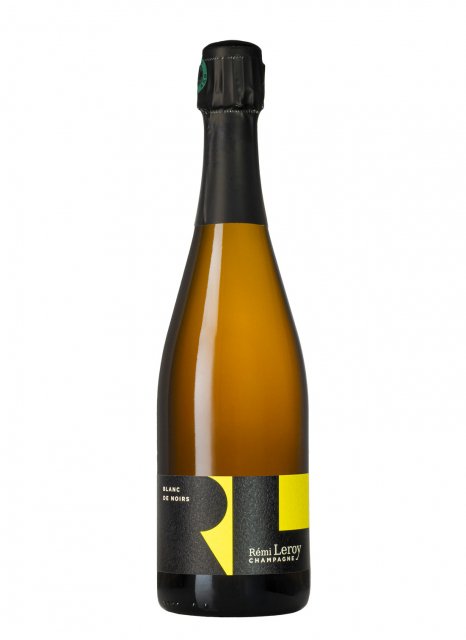
Rémi Leroy
Blanc de Noirs | Bottle 75cl
Rémi Leroy’s Blanc de Noirs is a full-bodied, rich, and briny champagne. This wine pairs well with white meats and cocktail parties. Its mineral intensity stems from a rigorous winemaking process in stainless steel tanks without any oak aging.
Order today and receive your parcel the Friday, September 18, 2026 by Chronopost.

All our champagnes are stored at controlled temperature

From 10,99 £GB in France and 9,99 £GB in Europe. Delivery in Relais Parcel offered soon

By Visa, MasterCard and Bank transfer

Leave a little message in your package

Description
Rémi Leroy’s Blanc de Noirs is a full-bodied, rich, and briny champagne. This wine pairs well with white meats and cocktail parties. Its mineral intensity stems from a rigorous winemaking process in stainless steel tanks without any oak aging.
This 100% Pinot Noir asserts its geological identity rooted in the terroir of the Côte des Bar. This cuvée has an alcohol content of 12.5% ABV and receives an extra-brut dosage of 1 g/L. The estate is certified by the High Environmental Value (HVE) label, confirming a commitment to sustainable viticulture across all its vineyards located in the Aube region.
The production of Rémi Leroy’s Blanc de Noirs
This cuvée is made from the direct pressing of Pinot Noir grapes. It is a blend of 70% from the 2022 harvest and 30% reserve wines. Yields are limited to ensure high-quality juice extraction. Pressing is carried out using a traditional press to eliminate any vegetal bitterness.
The decision to vinify exclusively Pinot Noir underscores the geographical roots of this Vigneron Champagne. Rémi Leroy sources fruit from massal selections planted over 35 years ago. These vines grow on the steep slopes of the Arce Valley. You can browse our selection of Blanc de Noirs cuvées to explore other expressions of this grape variety.
The reserve wines are aged in tanks according to the principle of a partial solera system initiated in 2011. The dosage of 1 g/L highlights the wine’s freshness.The wine thus retains a distinct terroir identity, free from oxidative markers.
The Terroir
The Meurville vineyard is situated on soils dating from the Upper Kimmeridgian geological stage. These clay-limestone marls contain a high density of marine fossils known as Exogyra virgula. This stratigraphic composition ensures constant water regulation for the vines in a semi-continental summer climate.
The south- and southeast-facing plots reach an average altitude of 200 meters above sea level. Nighttime temperature fluctuations maintain a low pH, measured at around 3.10 the day before harvest. This unique geology imparts to the wine a clean, lingering mineral finish.
The estate practices controlled natural grass cover, in accordance with Level 3 HVE specifications. The root system, extending more than one meter deep, draws nutrients directly from the limestone bedrock. This agronomic approach promotes the accumulation of anthocyanins and phenolic compounds in the grape skins.
Vinification
Alcoholic fermentation takes place entirely in temperature-controlled stainless steel tanks at a temperature maintained between 16°C and 18°C. Cold settling is carried out for 12 hours to retain the aromatic precursors. Fermentations are initiated exclusively by indigenous yeasts selected from the Meurville terroirs.
The winemaker limits the addition of sulfur dioxide to a total of less than 30 mg/L. Malolactic fermentation is carried out systematically to soften the wine’s acidity. This process lowers the total acidity and provides the essential lactic roundness to counterbalance the austerity of the base vintage.
Aging on fine lees lasts for 20 months in the bottle in cellars maintained at 11°C. Secondary fermentation in the bottle generates an internal pressure of 6 bars. Disgorgement took place in May 2025, followed by a resting period of several months to stabilize the dosage.
The 2022 Base Year
This cuvée is a blend of wines from the 2022 harvest and reserve wines from previous vintages. The year 2022 saw average summer temperatures of 22°C in July and August, with no significant rainfall. The harvest began on September 5 under direct sunshine. The lack of humidity slowed the development of botrytis, ensuring the Pinot Noir berries brought to the winery were in impeccable condition.
The sugar content at harvest exceeded the threshold of 10.5% potential alcohol by volume from the very first cuts. The Kimmeridgian rock released its water reserves, preserving a total acidity measured at 6.5 g/L in H₂SO₄ equivalent. This foundation gives the wine a tannic bite and dense body from the very first sip.
This advanced phenolic ripeness dictated the analytical choice of an extra-brut dosage. Critic Robert Parker awarded this wine a score of 92/100 on the Wine Advocate website. The 2022 vintage thus ranks among the sunny years that produce juices with high aromatic concentration in the Côte des Bar.
Tasting notes
Appearance
The luminous color reveals a pale gold hue with subtle coppery highlights. The effervescence unfolds majestically, forming a continuous stream. The surface film is brilliant, reflecting the high-quality extraction of the juice during pressing.
Nose
At first, the nose releases notes of crushed raspberry and bigarreau cherry characteristic of Pinot Noir. After 5 minutes of aeration in the glass, hints of sweet spices and licorice emerge. The extended aging of 20 months on lees brings out undertones of marzipan and toasted bread.
Palate
On the palate, the attack is clean, immediately introducing a full-bodied, vinous texture. The mid-palate develops aromas of crisp morello cherry, supported by the 2022 vintage. The finish, measured at 8 caudalies, displays a chalky salinity that is subtly softened by the dosage of 1 g/L.

Pairing Suggestions

- Bellota Iberian ham
- Gougères with aged Comté cheese
- Toasts with black tapenade

- Capon with morels
- Roasted Bresse pigeon
- Spiced Peking duck

- 24-month-aged Comté
- Farmhouse Chaource
- Thin fig tart
The Expert's Opinion: Plus de Bulles
This cuvée exemplifies the rigorous winemaking approach of the Aube region, its integrity reminiscent of Cédric Bouchard’s wines. The decision to ferment using indigenous yeasts and to age the wine for an extended period in tanks ensures a direct expression of the terroir. You can compare this profile with a Blanc de Blancs champagne from the Côte des Blancs to analyze the difference in tannic impact between a black grape and a white grape. Rated 16.5/20 by critic Jancis Robinson, this wine offers a dense phenolic structure. Allowing the wine to breathe for 10 minutes in the bottle at a temperature of 10°C will let the aromatic molecules fully express themselves without overwhelming the palate with carbon dioxide.
Storage and Serving Recommendations
How should this champagne be stored?
It should be stored in a dark cellar with a stable temperature between 10°C and 12°C. The humidity level must be maintained above 70% to preserve the elasticity of the cork. Bottles should be stored horizontally so that the wine remains in direct contact with the cork.
Aging Potential
The 2022 base vintage gives this cuvée a structure capable of evolving over the coming decade.
- Within the first year: The attack reveals the liveliness of the 2022 vintage through prominent aromas of redcurrant and raspberry.
- Within 3 years: The structure matures, and the wine develops notes of warm brioche and toasted hazelnuts.
- Beyond 6 years: Tertiary aromas take the lead, steering the tasting toward forest honey and candied fruit.
Serving Suggestions
Serve this wine at a temperature of 10°C to 11°C in a wide-bowled glass. This geometric shape dissipates the carbon dioxide pressure while retaining the fruity aromas at the bottom of the glass. This champagne gains depth if uncorked a few minutes before the first pour.
Trivia about this cuvée
A graduate in agricultural engineering and oenology, Rémi Leroy has been mapping the pH levels of his Aube vineyards since he settled there in 2006. He has drastically reduced the use of copper on his vines, limiting annual doses well below the 4 kg/ha cap. This meticulous agronomic monitoring has positioned his 9-hectare vineyard among the most closely scrutinized estates in the Côte des Bar.
Learn more about the Blanc de Noirs cuvée from Rémi Leroy Champagne
What is the price of the Rémi Leroy Blanc de Noirs cuvée?
The price of this champagne is 34,96 £GB. This price reflects a yield capped at 4,500 kg/ha and a 20-month aging period on the lees, a long production cycle that promotes cellular autolysis.
What are the reviews of Rémi Leroy’s Blanc de Noirs champagne?
English-speaking critic Jancis Robinson gives this cuvée a score of 16.5/20 for its vinous density. Reviews of the Blanc de Noirs cuvée from Rémi Leroy written by our customers confirm its ability to pair well with roasted meats.
What is the dosage of Rémi Leroy’s Blanc de Noirs champagne?
The addition of dosage is limited to 1 gram of sugar per liter, classifying it as Extra-Brut. This restrictive dosage highlights the tactile salinity inherent in the Kimmeridgian marls of southern Champagne.
Can this wine be compared to Philipponnat’s vintage Blanc de Noirs?
Rémi Leroy’s plot-by-plot approach produces a wine distinct from the cuvées of the Marne Valley. You can explore Philipponnat’s vintage Blanc de Noirs to appreciate the tannic contribution of fermentation partially carried out in oak.
What makes the Meurville terroir unique?
The subsoil of Meurville consists of clay-limestone marl containing clusters of Exogyra virgula fossils. This Kimmeridgian matrix provides capillary water retention that preserves the acidity of the grapes during hot summers.
When was the Blanc de Noirs Rémi Leroy cuvée disgorged?
The disgorgement date is set for May 2025, following a 20-month autolysis period. The wine then spent at least 3 months in the estate’s cellars to absorb the expedition liqueur before being released for sale.
Characteristics
Terroirs
Grape varieties
Pinot Noir (100%)
Winemaking
Couleur:
Non vintage
Oak aged
Aged in vats
Malolactic Fermentation :
Undergone
Dosage:
Extra brut (between 0 and 6 gr/l)
Tasting
Aromas
FruityToasted
Pairings
Ideal for aperitif
Serving température
10°C
Tasting window
 20262029
(Best)2033
Starred tables

Chef-Sommelier du restaurant 3 étoiles Pierre Gagnaire, Patrick Borras accompagne et conseille l'équipe de Plus de Bulles depuis 2009. Un véritable engagement et un gage de qualité pour tous les champagnes proposés sur le site.
MoreRémi Leroy Blanc de Noirs : good to know
| 🍾 Format | Bottle |
|---|---|
| ↕️ Dosage | Champagne extra brut |
| ⏳ Wine ageing | Champagne vinified in vats |
| 🔎 Malolactic fermentation | Undergone |
| 🎨 Colour | White champagne |
| ⭐ Vintage | Non vintage champagne |
| 🍇 Cépage | Pinot noir |
| 💡 Type de champagne | Blanc de blanc de pinot noir |
Opinion of thewine guides