


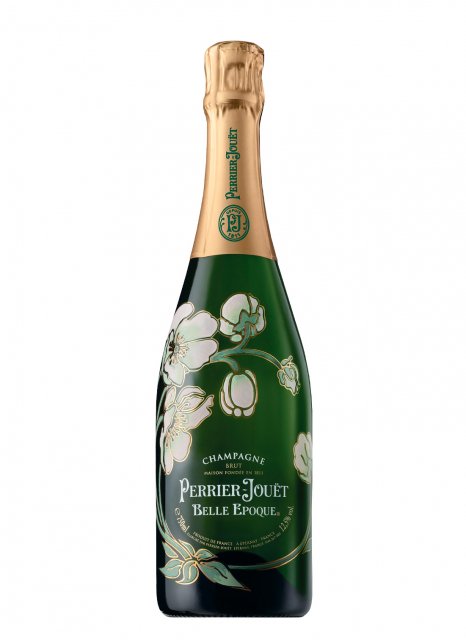


Description & elaboration
The Belle Epoque 2018 cuvée from Perrier-Jouët is a vintage champagne with floral notes of jasmine — carried by a silky texture on the palate. The spiced finish and lively attack make it a natural companion for fine dining. This cuvée combines the solar warmth of the vintage with the delicacy of a precise selection.
The Terroir
The grapes come from classified villages: Cramant, with its very shallow chalky soil, Avize for its east-facing exposure, Chouilly which lends rounded touches to the final wine. Mesnil-sur-Oger brings a structuring acidity for ageing, Vertus completes the ensemble from the Côte des Blancs.
The black grapes come from the Montagne de Reims: Mailly for the freshness of the berries thanks to its north-facing slopes; Verzy offers fruit with preserved tension.
Winemaking
Cellar master Séverine Frerson oversees the elaboration. The blend brings together 50% Chardonnay and 45% Pinot Noir, with 5% Meunier to complete it. Pressing takes place in traditional presses; the first-run juices form the principal base.
Alcoholic fermentation takes place in temperature-controlled stainless steel vats at 18°C, which preserves the primary aromas of the grapes. Malolactic fermentation (the conversion of malic acid into the softer lactic acid) is carried out systematically: it lowers overall acidity and adds a creamy texture. The still wines are tasted in spring. The final dosage is set at 7 g/L.
The 2018 vintage
The year 2018 opens with a rainy winter: the months of January and February record rainfall highs that replenish the water table.
The vineyard comes under mildew pressure in spring. The situation clears up from summer onwards: temperatures exceed ten-year averages in July, without any water stress.
The vegetative cycle accelerates in August. These conditions favour exceptional ripeness and great aromatic richness. The harvest brought into the presses is healthy, with a resolutely generous and fruity profile.
Tasting Notes
Appearance
The "Belle Epoque 2018" cuvée reveals a luminous golden hue. Fine streams of bubbles feed a persistent mousse.
Nose
On the nose, one discovers notes of jasmine and carnation, mingled with linden blossom. The second nose reveals aromas of fleshy vineyard peach.
Palate
On the palate, this champagne presents a fine and silky texture. The lively attack evokes a crunchy mandarin leaf. The tasting concludes with a spiced finish of Timut pepper.

Pairing Suggestions

- Sea bass carpaccio
- Crottin de Chavignol
- Seared spring onions

- Lobster with Timut pepper
- Roasted turbot
- Grilled prawns

- Roasted white peaches
- Pan-fried ceps
- Elderflower ice cream
The Plus de Bulles Expert's Opinion
Why I love it
What moves me about this vintage is its floral freshness of great finesse, between carnation and linden blossom. I adored its silky texture on the palate, which stretches towards an original finish with notes of Timut pepper.
My recommendation
Serve this champagne at 8–12 °C in a wine glass. It will pair ideally with turbot with ceps or a delicately prepared lobster.
Advice
How to store this champagne?
Plus de Bulles ships this bottle (75 cl) in reinforced cartons specially designed for champagne transport. After receipt, we recommend storing it horizontally, away from light.
Ideally in an underground cellar; alternatively, in a cool, not too dry place with a stable temperature. Ensure the absence of vibrations, which disturb the wine's rest and affect the fineness of the effervescence.
Ageing potential
The Belle Epoque 2018 from Perrier-Jouët will evolve favourably over the long term. The wine's profile gives it a cellaring potential of approximately 15 to 20 years.
- Until 2028: the cuvée will offer floral notes and a citrus vibrancy.
- From 2029: the champagne will evolve towards touches of freshly baked pastry.
- Around 2038: this bottle will enter its aromatic maturity with notes of honey.
Serving advice
This wine is best served at 8–12°C, a range that preserves the delicacy of the floral aromas. A wide-based tulip glass is recommended: it concentrates the bouquet within the bowl and allows the scents to be appreciated without dispersing the effervescence. Avoid decanting this wine in order to maintain its tension.
Chilling is best done in an ice bucket. Plunge the bottle into a mixture of water and ice cubes; thirty minutes is sufficient to reach the ideal temperature.
An anecdote about this cuvée
The bottle design captivates the eye. The white anemones were drawn in 1902 by Émile Gallé, a pioneer of the Art Nouveau movement. Inspired by botany, this glass artist adorned the glass itself with enamelled vegetal arabesques. This heritage is enshrined in the values of the Union des Maisons de Champagne.
Enthusiasts wishing to explore other expressions from the house will appreciate the floral elegance of the Perrier-Jouët Blanc de Blancs. To accompany roasted dishes that call for a more structured vinosity, connoisseurs will turn to the gastronomic character of the Blason Rosé.
