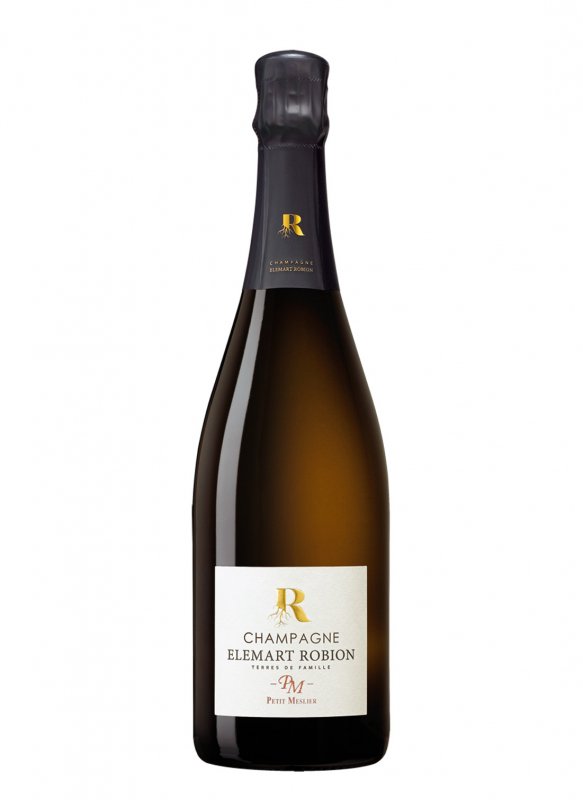
The Petit Meslier 2022 from Elemart Robion is a champagne made entirely from Petit Meslier, a rare grape grown on a single parcel in Lhéry.
It speaks of bright citrus and white fruit, lifted by a floral note. Made from a single grape variety, this vintage champagne has an airy texture, drawn tight by a saline freshness that stays crisp.
This is a bottle you can open with the first drinks, alongside brown shrimp for instance, and return to at the table with steamed langoustines or moules marinière. A yuzu sorbet at dessert carries that momentum through to the end.
The Terroir
The Petit Meslier 2022 is a Blanc de Blancs, made solely from Petit Meslier. The grapes come from the terroir of Lhéry, an unclassified village in the Vallée de l'Ardre, on the Montagne de Reims, where Elemart Robion farms its vines.
One grape variety, one village, one harvest year: nothing is blended, and what the vine draws from its soil and takes from its surroundings is there in the glass for all to read. This choice of transparency makes the bottle a pure expression of its place of origin, far removed from the balance sought through blending.
On this terroir, Petit Meslier gives the wine vivacity and freshness.
This cuvée is certified organic: the vines are grown without pesticides or synthetic fertilisers.
The Winemaking
Thierry Robion chose to age this 2022 Petit Meslier in stainless steel tank. The choice protects the fruit: steel adds no oaky notes, and the wine keeps a clean, linear freshness that nothing comes along to soften. The character of Petit Meslier is allowed to speak plainly.
He then opted for a Brut Nature (a champagne with no dosage at all, that is, without the sweet liqueur usually added before the final cork goes in). Without that small addition of sugar, the grape's natural acidity is not softened: the palate gains precision and purity, from the attack right through to the very end. This is the 2022 vintage in its most direct form.
The 2022 Vintage
In 2022, the Champagne vineyards were hit by frost and hail, which affected only a small share of the crop's potential, followed by high temperatures. The heat favoured ripeness: the vineyard was in very good sanitary condition by the end of July, and picking began in the last days of August. In Lhéry, in the Ardre valley, the Petit Meslier in this cuvée, from that single village, made the most of these conditions. The vintage stands out for its precocity. That ripeness carries through into the glass: the wine shows ripe fruit and a roundness that mark the character of the year.