
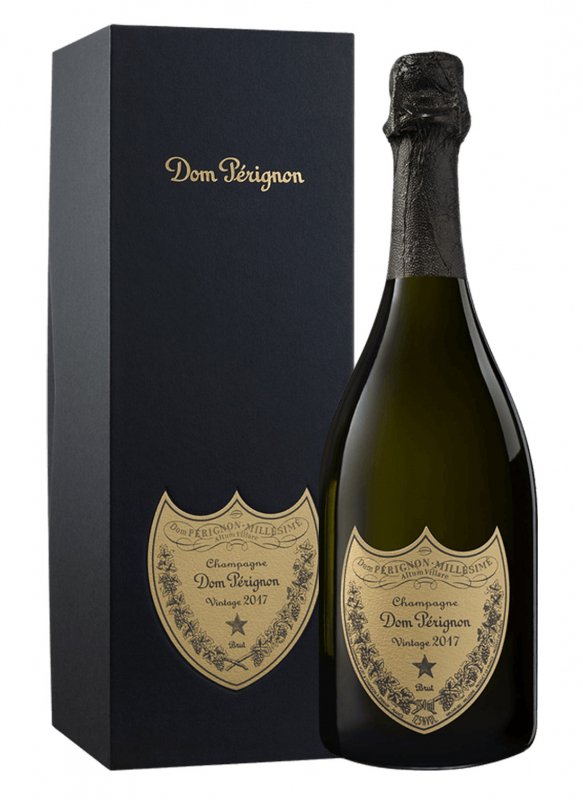
Dom Pérignon Vintage 2017 is a lively, complex champagne with remarkable tension. Its structure makes it a natural pairing for both aperitifs and roasted meats. The cuvée is partof the Dom Pérignon legacy within the LVMH group and keenly reflects the climatic contrasts of an exceptional year.
The production of Dom Pérignon Vintage 2017
The Terroir
The Dom Pérignon vineyard spans the Montagne de Reims and the Côte des Blancs, two renowned areas of the Champagne AOC celebrated for their terroirs. The grapes thus come from the 17 villages classified as Grand Cru. The historic Premier Cru of Hautvillers, home to Pierre Pérignon’s abbey, completes this selection of plots.
The slopes of Aÿ and Bouzy yield concentrated Pinot Noirs, while Cramant and Avize contribute their characteristic saline character. Verzenay and Chouilly balance the final blend. The south and southeast exposure of all these slopes ensures continuous sunlight and optimal photosynthesis.
The subsoil of these terroirs consists of Campanian Cretaceous chalk, which naturally regulates the vines’ water supply during scorching summers. This chalky soil gives the wine its signature chalky finish.
The Winemaking
This is the last vintage produced by Dom Pérignon’s iconic Cellar Master, Richard Geoffroy. Vincent Chaperon, who succeeded him, worked alongside him on this Vintage. The blend is atypical for Dom Pérignon, with 61% Chardonnay and 39% Pinot Noir—a ratio deliberately geared toward structure to withstand climatic challenges. Alcoholic fermentation takes place in temperature-controlled stainless steel tanks over approximately two weeks, preserving the purity of the primary aromas.
Malolactic fermentation is then carried out in these same tanks, rounding out the natural acidity of the musts. The absence of oak aging defines the house’s reductive style. The wine then ages for 96 months on lees in the cellars, a prolonged aging process that promotes yeast autolysis and develops tertiary aromas of roasted notes.
Disgorgement takes place several months before the bottles are labeled. The Extra Brut dosage is set at 5 g/L, with a neutral liqueur that preserves the integrity of the mineral profile.
The 2017 Vintage
The growing season began with a particularly dry winter. On April 20, spring frosts severely damaged the buds, causing temperatures to plummet across the Montagne de Reims vineyards and drastically limiting yields.
A hot, scorching summer followed this frosty spell. Flowering accelerated under the influence of high summer temperatures. In late August, rainfall triggered localized botrytis, primarily affecting the Pinot Noir clusters. The winemaking team then intensified their vigilance with each pass through the rows.
Meticulous sorting in the vineyard isolates the healthy berries, followed by a second pass on the sorting table to eliminate any remaining defects. Harvesting begins early, at the end of August, preserving the acidity of the juices. This rigorous sorting results in limited volumes for the 2017 vintage.
Tasting Notes for the 2017 Dom Pérignon Vintage
Color
The 2017 Dom Pérignon Vintage boastsa pale yellow color with green highlights. The effervescence forms a persistent string of fine bubbles.
Nose
The initial nose reveals hints of white jasmine. Upon aeration, notes ofcandied citrus emerge, before the bouquet evolves into delicate toasted nuances. A hint of petrichor signals the mineral origin of the chalk.
Palate
The attack on the palate is clean, introducing a creamy texture. The balance rests on citrus zest and a subtle acidity. The chalky finish lingers long on the palate, leaving a hint of saltiness on the eight measured caudalies.

Pairing Suggestions

- Osciètre caviar
- Crab Toast
- Comté cheese gougères

- Rack of lamb
- Roasted langoustines
- Truffle risotto

- Orange Zest
- Aged Parmesan
- Aged Chaource
Expert Opinion: More Bubbles
The 2017 vintage is distinguished by exceptionally low yields in Champagne. A natural acidity complements a pronounced phenolic maturity. This bottle (75cl), presented in its gift box, exemplifies the house’s technical mastery. The dominance of Chardonnay imparts a taut, briny texture, extended by autolytic notes of roasted coffee resulting from 96 months on the lees. This wine benefits from being aerated for five minutes in a flute. The dosage of 5 g/L preserves the balance without masking the intensity. The wine has aging potential spanning several decades.
Storage and Serving Recommendations
How should this champagne be stored?
This 2017 Dom Pérignon Vintage cuvée is shipped in our specially designed champagne shipping boxes. Once at home, we recommend storing this bottle horizontally in a well-ventilated cellar to maintain the moisture of the cork. The ideal temperature should remain stable at around 12°C, away from any light sources. The box protects the bottle from light.
Aging Potential
The concentration of the grapes ensures prolonged aging in the cellar. The tartaric acidity supports the wine’s evolution over several decades.
- Immediate tasting: The wine offers notes of jasmine and citrus. The effervescence highlights a chalky liveliness.
- Aromatic maturity phase (by 2032): The champagne will develop autolytic notes. The palate will reveal hints of toasted brioche.
- Tertiary evolution phase (from 2042): The cuvée will present nuances of candied fruit. Gentle oxidation will impart a honeyed patina.
Serving recommendations
It is best served at a temperature of 10°C in a tulip-shaped glass that concentrates the volatile aromas. A ten-minute aeration period is recommended: this rest period dissipates the reductive notes resulting from the long aging on lees.
Trivia about this cuvée
The unpredictable weather of 2017 limited bottled volumes to about one-third of the estate’s usual production. Manual sorting removed bunches affected by botrytis, and the decision to release a vintage reflects an uncompromising commitment to quality.

 What customers liked most