
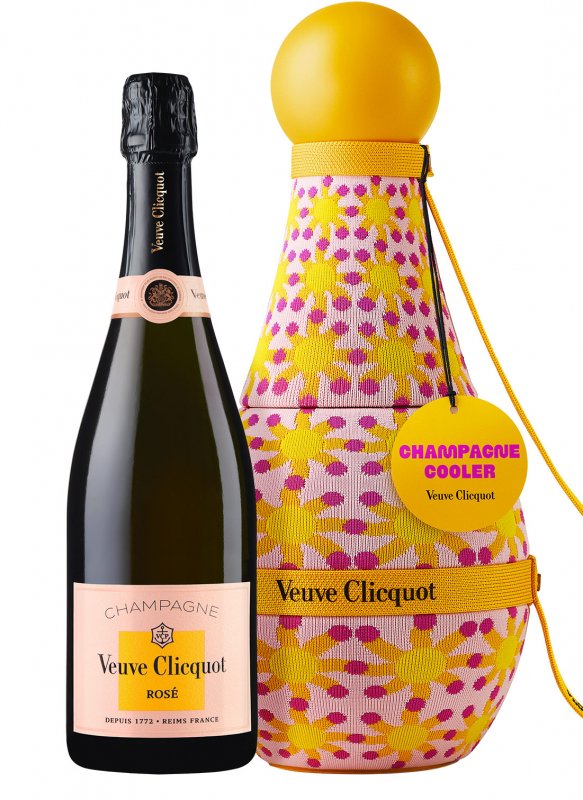
The Veuve Clicquot Brut Rosé cuvée included in this Sun Totem Yinka Ilori gift set is a fruity, structured, and full-bodied champagne. This wine is the perfect accompaniment to your aperitifs as well as to dinners featuring white meats or spicy dishes. This limited edition stands out for its unique blend of contemporary art and the tasting experience.
Designed as a luxury gift, this cuvée reflects the expertise of a prestigious Champagne House. The use of a significant proportion of reserve wines ensures the continuity of its signature style, marked by the vinous character of the predominant black grape variety.
This edition comes with an exclusive gift box designed by Yinka Ilori. The artist draws on his roots and Nigerian culture to offer a geometric reinterpretation of the traditional calabash through vibrant patterns. As part of a commitment to sustainable development, the Sun Totem gift box is made from three-dimensionally knitted recycled polyester. This functionally designed case transforms the bottle into a true collector’s item while keeping the wine chilled for 90 minutes. The unboxing experience highlights this chromatic work.
The creation of the Yinka Ilori Veuve Clicquot Sun Totem Brut Rosé champagne
The Terroir
The grapes are sourced from some fifty classified villages in Champagne. This diversity of plots encompasses the three major historical regions of the Champagne appellation. The Montagne de Reims provides black grapes grown on south- and southeast-facing clay-limestone soils. These specific terroirs ensure the development of a phenolic structure suited to extended aging.
The Marne Valley contributes Meunier grapes grown on predominantly clay and marl soils of the Sparnacian period. This grape variety imparts an immediate roundness to the wine. The Côte des Blancs offers Chardonnays grown on deep chalky soil rich in belemnites. This sedimentary rock acts as a natural water reservoir for the vines during dry summer periods, ensuring slow ripening.
Winemaking
Cellar Master Didier Mariotti upholds the house’s signature blending philosophy. The blend consists of50% Pinot Noir, 30% Chardonnay, and 20% Pinot Meunier, supplemented by 30% to 45% reserve wines. These reserve components, stored separately by vineyard and vintage, can age for up to nine years in the cellar before their final use.
Fractional pressing extracts the musts by separating the cuvée juices from the pomace. These juices then ferment in temperature-controlled stainless steel tanks at around 16°C. Malolactic fermentation is systematically carried out to convert malic acid into lactic acid. This blended rosé results from the marriage of white wine and still red wine to achieve its rosé hue and characteristic aromas. The still red wine used comes exclusively from plots located in Bouzy, renowned for their sun exposure.
Secondary fermentation takes place slowly deep within the cellars. The bottle (75cl) is then rested on slats in the underground chalk cellars of Reims for 36 months. After disgorgement, an additional period of cellaring lasting several months allows the wine to harmoniously integrate its dosage.
Blend Characteristics
This cuvée is crafted without reference to a single vintage to smooth out the region’s specific climatic variations. The base year is selected for its aromatic profile, then supplemented with wines from six different previous harvests. This complex method requires rigorous mapping of the clear wines stored in the cellars. Annual weather variations are thus offset by the quality contributions of previous vintages. The result ensures consistent flavor profile, with promising aging potential over the three years following release.
Tasting notes
Appearance
The color displays a luminous salmon hue. Light coppery highlights accentuate the brilliant disc in the glass. The effervescence manifests as a myriad of fine bubbles. A persistent bead gracefully crowns the wine.
Nose
On the nose, one discovers notes evocative of wild strawberries. Hints of raspberry and morello cherry round out this intensely fruity profile. Aeration reveals delicious aromas of sweet almond and toasted bread. A hint of white pepper adds a spicy dimension.
Palate
On the palate, this champagne offers a clean attack. The tannic structure derived from Pinot Noir frames the development of the tasting experience. Aromas of pink grapefruit and pastries blend harmoniously. The finish lingers with a salty and mineral expression, measured at 6 caudalies.

Pairing Suggestions

- Bluefin tuna tartare
- Chili bites
- Comté cheese gougères

- Glazed duck breast
- Saffron monkfish curry
- Roasted veal fillet

- Aged Brillat-Savarin
- Raspberry Tart
- Fruit Macarons
Expert Review: Plus de Bulles
The significant proportion of reserve wines lends this cuvée a distinctive character. The richness of the Pinot Noir is balanced by the crispness of the Chardonnays. This structured profile allows for bold pairings with spicy dishes.
To explore other fruity expressions, discover the various rosé champagne cuvées in our selection.
Storage and Serving Recommendations
How should this champagne be stored?
The wine requires a stable environment to preserve its aromatic integrity. A cellar temperature maintained at 11°C is required. Storage requires total darkness to prevent a "light-struck" taste. Proper humidity prevents the cork from drying out.
Aging potential
The phenolic structure provides the necessary substance for optimal aging in the cellar.
- Immediate tasting: The wine reveals primary notes of red fruit.
- Aromatic maturity phase (within 3 years): The wine develops richer, more indulgent aromas.
- Tertiary evolution phase (in 6 years): The profile shifts toward complex nuances.
Serving recommendations
A serving temperature of 9°C is recommended. A tulip-shaped glass enhances the aromatic expression. Decanting is not necessary to preserve the initial pressure of 6 bars.
Trivia about this cuvée
The story dates back to 1818. Madame Clicquot developed the first known blended rosé champagne, marking a major technical advancement in the region. Prior to this, rosé champagnes were produced solely through skin maceration. The geometric pattern on the box pays a contemporary tribute to the archives of the House of Veuve Clicquot.
