




Description & elaboration
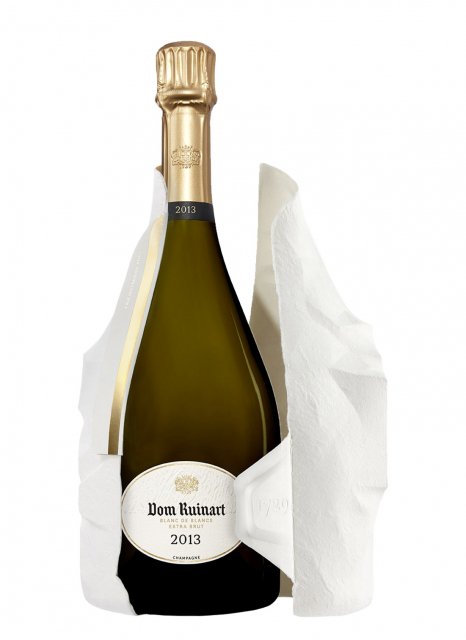
The Dom Ruinart 2013 cuvée from Ruinart is a Blanc de Blancs champagne sourced exclusively from Grand Cru-classified plots. It is a champagne of golden brioche, yellow citrus and roasted pineapple, underpinned by the mineral tension characteristic of Chardonnay from the Côte des Blancs. On the palate, its chalky texture and crisp acidity make it a natural companion to fine dining. Ruinart presents it in its signature sculpted gift box, produced in limited quantities and aged to exceptional maturity.
The Terroir
The grapes come exclusively from Grand Cru-classified plots. Ninety per cent of the Chardonnay is sourced from the Côte des Blancs. Le Mesnil-sur-Oger, Avize and Chouilly bring a saline minerality to the blend. Cramant completes this chalky Marne foundation.
The remaining ten per cent comes from the Montagne de Reims. The terroir of Sillery provides structural backbone to the blend. Its pure chalk soil gives an amplitude reminiscent of a Blanc de Pinots Noirs. The House cultivates a specific Chardonnay here for this cuvée.
The subsoil of the Côte des Blancs is composed of Campanian chalk. This porous rock regulates the water supply to the vines during summer. The roots reach several metres down into limestone fissures, drawing up a mineral tension that is palpable on the finish.
The House has held the Haute Valeur Environnementale certification for several years. The Viticulture Durable en Champagne label further endorses this commitment. The selected plots face east or south-east, ensuring a slow, gradual ripening of the Chardonnay grapes.
The winemaking
Only the must from the first pressing goes into this blend. A static settling of twelve hours precedes transfer to the vats. Fermentation takes place in temperature-controlled stainless steel tanks. Malolactic fermentation then softens the base wine.
Cellar master Frédéric Panaïotis oversees this precise work. He chose to reintroduce tirage under natural cork (the cork replaces the traditional crown cap during the second fermentation). A metal staple holds the cork in place on the neck. This method imparts greater aromatic intensity and finer bubbles to the vintage.
The wine then rests for 108 months on laths. This extended stay on the lees develops complex autolytic aromas of brioche and dried fruits. Disgorgement is carried out by hand in the cellars.
The expulsion of the lees follows prior freezing of the neck. The wine then enjoys several further months of rest before shipment.
The 2013 vintage
The 2013 growing cycle followed a late chronology. A cold winter and a wet spring pushed the viticultural calendar back by nearly three weeks across the Champagne region.
Bud break did not occur until the end of April. Flowering began in early July. The dry, sunny summer limited disease pressure on the grapes through to the start of harvest.
Chardonnay picking began in early October. This delay produced a wine with a sharp acid tension and a well-balanced sugar-to-acidity ratio. This profile directly enhances the champagne's ageing potential in the cellar.
Tasting notes
Appearance
The colour is a golden yellow with green reflections. Fine silvery nuances accompany the rising bead. The effervescence is persistent at the centre of the glass.
Nose
The first nose exhales notes of toasted dried fruits. Aeration reveals pastry touches and yellow citrus aromas. Hints of roasted pineapple and a smoky undertone emerge thereafter. This bouquet reflects the aromatic impact of the tirage under natural cork and the 108 months on laths.
Palate
The attack delivers an immediate mineral tension. The chalky texture envelops aromas of ripe yuzu zest. The finish lingers on notes of cracked white pepper. Gentle spices punctuate the last moments of this cuvée.

Food pairing suggestions

- Toast with Sologne caviar
- Plump oysters
- Aged Iberian ham

- Braised veal sweetbreads
- Whole roasted turbot
- Lobster thermidor

- Parmesan aged 36 months
- Aged Vieux Comté
- Hazelnut macaron
The Plus de Bulles expert's opinion
Why I love it
What moves me about this cuvée is its crystalline, harmonious freshness. I was captivated by its intense toasted notes, underpinned by delicate nuances of dried fruits and citrus.
My recommendation
Serve this champagne at 10–12 °C, preferably in a wine glass to allow its aromas to fully unfold.
Tips & advice
How to store this champagne?
Plus de Bulles ships this bottle (75cl) in reinforced packaging specially designed for champagne transport. Upon receipt, we recommend storing the bottle on its side, away from light — ideally in a cellar, or at the very least in a cool, not overly dry place with a relatively stable temperature.
Ageing potential
The Dom Ruinart 2013 from Ruinart is enjoyable now, while also displaying a cellaring capacity of 15 years.
- Until 2030: the cuvée reveals crisp citrus aromas and a pronounced chalky minerality on the palate.
- From 2030 to 2035: the wine develops notes of brioche, dried fruits and toasted hazelnut.
- After 2035: it enters a spicy tertiary phase, with aromas of blond tobacco and forest floor.
Serving advice
Serve this champagne between 10 and 12°C. Remove the bottle from its sculpted box before serving. A tulip-shaped glass concentrates the autolytic aromas (derived from the long contact with the lees). A brief aeration of a few minutes releases notes of white fruits. An ice bucket can be used to maintain the serving temperature.
A note about this cuvée
The bottle is presented in a premium sculpted gift box that follows its exact lines. Its relief mimics the rock of the House's Gallo-Roman chalk cellars, listed as a UNESCO World Heritage Site, where the wine ages on laths. These cellars form the heritage of the Champagne Houses. The box also provides protection for the wine during transport and storage.
This 2013 vintage benefits from a few minutes of aeration to reveal its complex bouquet. Enthusiasts wishing to discover the world of the House can explore the House's classic expression in a half-bottle while waiting for this vintage to reach its peak.
Also worth discovering: the cellar-aged gift set from Ruinart.

Opinion of thewine guides