
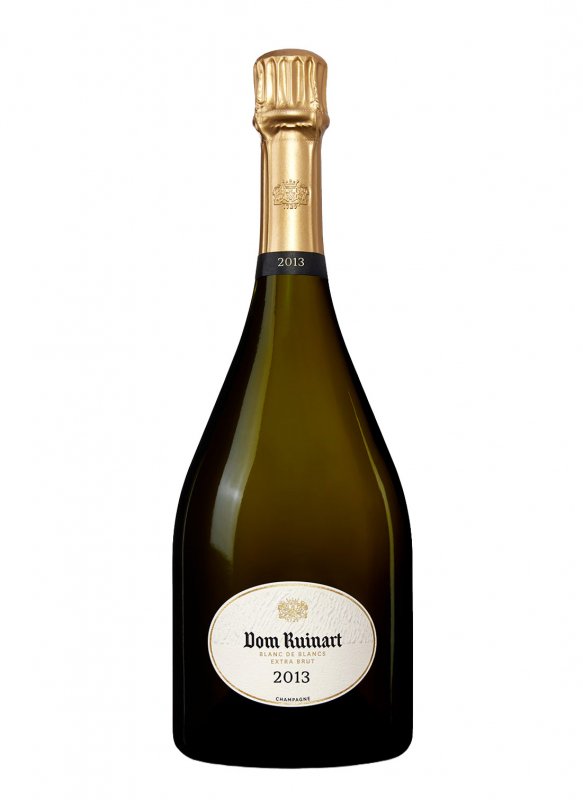
The Dom Ruinart Blanc de Blancs 2013 cuvée embodies the quintessence of Maison Ruinart's expertise. This exceptional vintage marks a major milestone in Cellar Master Frédéric Panaïotis' quest for excellence: the return to cork closure. Made exclusively from Chardonnay Grands Crus and aged for at least nine years on racks, this champagne reveals an unprecedented aromatic complexity. Manual disgorging, a centuries-old technique reintroduced for this cuvée, enhances a wine with crystalline freshness and intense toasted notes.
The production of Dom Ruinart 2013
This champagne is 100% Chardonnay, exclusively from Grands Crus classified terroirs. It reflects the rich palette of Champagne terroirs with a precise blend:
- 70% Côte des Blancs: Le Mesnil-sur-Oger, Avize, Chouilly, and Bergères-lès-Vertus (for finesse and elegance).
- 30% Montagne de Reims: Verzenay, Sillery, Taissy, and Villers-Marmery (for structure and power).
The Return to Cork
To give greater depth and complexity to the aging process, the House has replaced metal capsules with cork stoppers during the second fermentation (tirage liège). This noble material preserves the wine's aromatic freshness and tension over time. This involves the return of a rare artisanal technique: manual disgorging, bottle by bottle.
Vinification & Aging
- Fermentation: Alcoholic fermentation in temperature-controlled stainless steel vats and malolactic fermentation.
- Aging: At least 9 years on cork-covered slats. In total, 12 years are required to produce this cuvée.
- Dosage: Extra-Brut at 5.5 g/L, for perfect balance.
The 2013 vintage
2013 is characterized by a long and late cycle, reminiscent of the great classic vintages. After a particularly cold winter and spring (the coldest in 20 years), the harvest did not begin until the end of September. This late ripening allowed grapes to be harvested with a unique balance, promising wines of great finesse and remarkable freshness.
Tasting notes
Color
The color is an intense golden yellow, adorned with slight green highlights and silvery nuances.
Nose
The initial nose is intense, revealing toasted aromas, dried fruit, and pastry notes (characteristic of cork aging). The second nose opens with the freshness of citrus and exotic fruits, mingled with floral, mineral, and delicately smoky touches.
Palate
On the palate, the wine displays a crystalline and harmonious freshness. The aromatic palette of citrus fruits extends to intense and fruity spice notes, enhanced by a hint of noble bitterness and peppery accents on the finish.

Food pairing suggestions

- Scallop carpaccio with citrus fruits
- Roasted langoustines with brown butter
- Pan-fried foie gras

- Wild turbot in a salt crust
- Bresse chicken with cream and morel mushrooms
- Braised sweetbreads

- 24-month aged Comté
- Aged Parmesan
- Thin pear and almond tart
Storage and serving recommendations
Aging potential
Thanks to the cork and the natural acidity of the 2013 vintage, this Dom Ruinart has immense aging potential:
- 2025–2029: The wine reveals its crystalline freshness, citrus notes, and intense toasted character (youth phase).
- 2030–2038: The complexity increases, the notes of dried fruit and spices become more pronounced, and the texture develops a patina (fullness phase).
- Beyond 2039: The wine enters a phase of very long-term aging, with roasted and smoky aromas magnified by the cork (complexity phase).
Serving suggestions
Serve this great wine at a temperature between 46°F and 50°F. Use a large white wine glass to allow the aromatic complexity (smoky and toasted notes) to fully express itself.
Anecdote about this cuvée
The intuition to reintroduce cork for aging on slats (instead of the standard metal cap) transformed the profile of Dom Ruinart. Tests conducted by Frédéric Panaïotis showed that cork, although more complex to manage (requiring manual disgorging), brings greater tension and aromatic complexity ("toasted notes") while better protecting the wine from oxidation over the very long term.
