
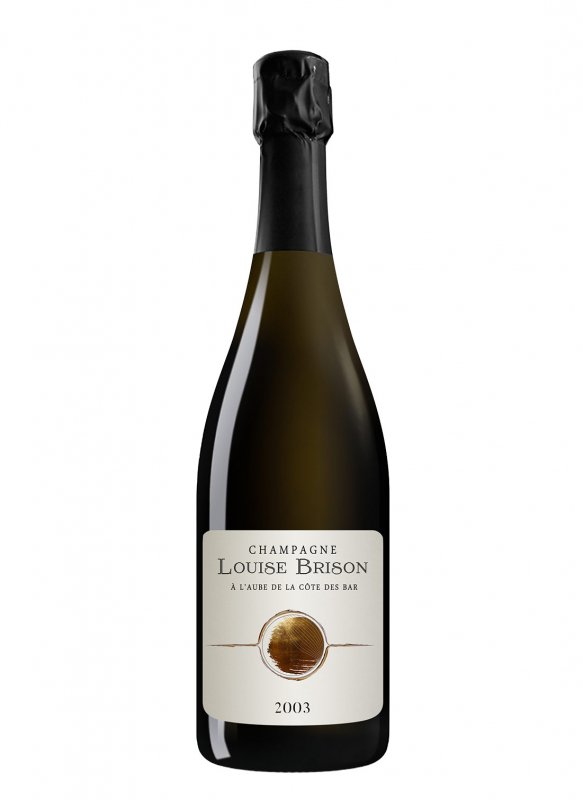
The 2003 Mémoire de la Côte des Bars cuvée from Champagne Louise Brison pays tribute to an exceptional vintage and the sunny identity of southern Champagne. Each year, the Louise Brison house sets aside a few bottles in its wine cellar. These bottles are stored in ideal conditions and offered for sale again after aging for at least 10 years. The bottles are recently disgorged to preserve their freshness.
The production of Champagne Louise Brison Mémoire de la Côte des Bars 2003
This cuvée is a 50/50 blend ofChardonnay and Pinot Noir, exclusively from the 2003 harvest. The aromatic objective: to capture the density of the vintage while revealing the elegance of the Kimmeridgian terroir of Noé-les-Mallets. Malolactic fermentation is blocked to preserve the wine's brightness and tension despite the richness of the year.
- The Chardonnay (50%) brings freshness, finesse, and length.
- Pinot Noir (50%) brings structure, vinosity, and fullness.
The terroir
Located in Noé-les-Mallets, in the heart of the Côte des Bars, the vineyard rests on Kimmeridgian clay-limestone soil, rich in marine fossils. The south/southeast exposure, at an altitude of 320 meters, promotes slow ripening and dense wines. This unique terroir, cultivated using sustainable viticulture methods, expresses a sunny and concentrated identity, tempered by a mineral structure.
Vinification
The juices are fermented and aged for 8 months in oak barrels, without malolactic fermentation. This choice, characteristic of the Louise Brison house, allows the natural tension and aromatic precision to be preserved. Disgorging was carried out recently, without any dosage (Brut Nature, 0 g/L), in order to preserve the integrity of the wine and its purity of expression.
The 2003 vintage
The 2003 vintage was marked by exceptional heat and extreme drought, resulting in grapes with concentrated ripeness. On the chalky slopes of the Côte des Bars, this richness was balanced by preserved residual acidity. The result: a sunny but still taut champagne of remarkable intensity, where the richness of the vintage is combined with great minerality. Its full texture and salty finish testify to a rare balance for this scorching year.
Tasting notes
Color
Deep gold with golden highlights. Fine, regular effervescence. The rich disc reflects the concentration of the vintage.
Nose
Expressive nose of honey, dried fruit, brioche, and candied citrus. With aeration, hints of hazelnut, wax, and sweet spices. A generous and deep bouquet.
Palate
Ample and caressing attack. Supple and vinous texture. The balance is based on the density of the fruit and a residual freshness that lengthens the finish. Long, spicy and salty finish, the signature of the Kimmeridgian terroir.

Food pairing
A gastronomic champagne par excellence, the richness and smoothness of this vintage pair well with creamy textures, roasted poultry, and noble fish. Its salty finish balances dishes with buttery or slightly smoky notes.

- Comté cheese puffs
- Seared scallops
- Smoked salmon rillettes

- Roasted free-range poultry
- Poached sea bass with beurre blanc
- Mushroom risotto

- Caramelized apple
- Thin pear tart
- Dried fruit crumble
Storage and serving
How to store this cuvée
Store at 10–12°C in a stable, dark cellar with humidity close to 70%. This champagne, already mature, can be stored for another 5 to 7 years. Over time, the notes of dried fruit and honey will intensify, while retaining a salty texture. Avoid temperature variations to preserve the residual freshness of the vintage.
Ageing potential
Optimal window: 2024–2031. Today, the cuvée expresses remarkable fullness. Between 2026 and 2030, it will gain in complexity, revealing aromas of almond, blond tobacco, and dried fruit. Beyond 2030, it will evolve towards accents of honey and wax while retaining an elegant minerality.
How to serve Mémoire de la Côte des Bars 2003?
Serve at 10–11°C in tulip or slightly open glasses to express the full aromatic richness of the vintage. Avoid decanting, but allow the wine to breathe for a few minutes before tasting. This champagne can be enjoyed on its own or with refined cuisine.
