
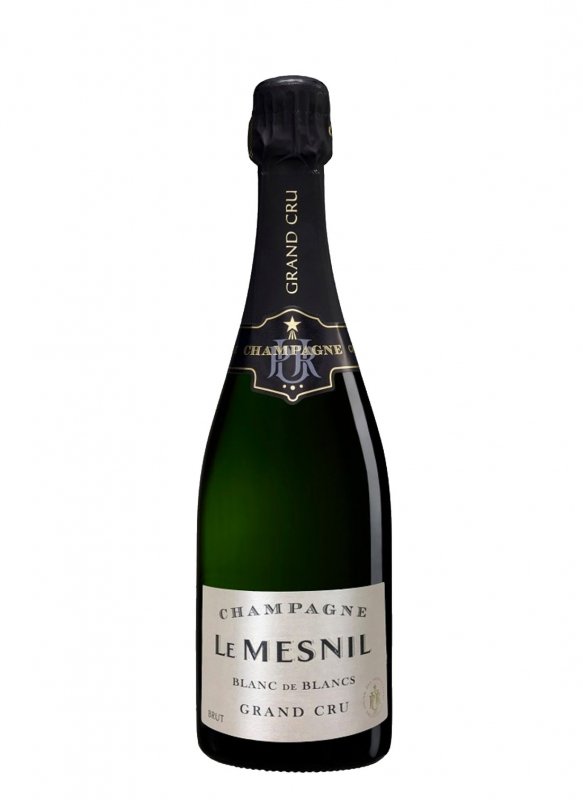
The Blanc de Blancs Grand Cruchampagne Le Mesnil expresses the purity of Chardonnay from the Côte des Blancs. Produced in the Grand Cru terroir of Mesnil-sur-Oger, it combines chalky integrity, refined effervescence, and a salty finish in a half-bottle format that is ready to enjoy.
The production of Blanc de Blancs Grand Cru Le Mesnil champagne (half-bottle)
The terroir
In the heart of the Côte des Blancs, Le Mesnil-sur-Oger lies on exposed chalk. This regulates water and heat, allows for slow ripening, and gives the wine a straightforward minerality, precise floral aromas, and a mouthwatering finish.
Vinification
The clear juices are fermented in vats to preserve their purity. Aging on fine lees adds texture and complexity to the bouquet. A measured dosage harmonizes the acidity and highlights the chalk. Bottling in half-bottles accentuates the immediate expression of the fruit and a more rapid evolution.
Tasting notes
Color
Pale gold with green highlights. Fine, regular effervescence. Crystal clear, persistent cordon.
Nose
White apple, pear, lemon. Wet chalk, fresh almond and a hint of toast when aerated.
Palate
Tense attack. Chiseled and precise texture. Juicy white fruit, powdery salinity, straight and long finish.

Food pairing
Pair with iodine-rich foods, delicate textures, and clean seasonings: shellfish, delicate fish, white poultry. The chalky tension and fine bubbles call for gentle cooking methods and light sauces that respect the balance of the Chardonnay.

- Oyster No. 3, lemon
- Comté cheese gougères
- Sea bream tartare

- Pan-fried scallops
- Sole with lemon butter
- Chicken supreme

- Poached white peach
- Light lemon tart
- Citrus shortbread
Storage and serving
Storing this half bottle
Store the half-bottle lying down in a dark, stable cellar at 10–12°C and ~70% humidity. Protect it from vibrations and temperature shocks. After transport, let it rest for 24–48 hours to stabilize the foam and bouquet.
Aging potential
Optimal window: 2025–2032. 2025–2027: lively expression, white fruits, lemony tension, marked chalk. 2028–2030: fuller mid-palate, notes of almond, fine brioche, and candied zest. 2031–2032: subtle tertiary complexity (light honey, citrus paste), intact saline freshness. In half-bottles, the evolution is faster than in 75 cL bottles.
Serving
Serve between 9 and 10°C in a slender tulip glass. Fill to one-third capacity and keep in an ice bucket (2/3 water, 1/3 ice) to maintain consistent freshness. Avoid decanting; open 5–7 minutes before serving to allow the bubbles to settle.
