
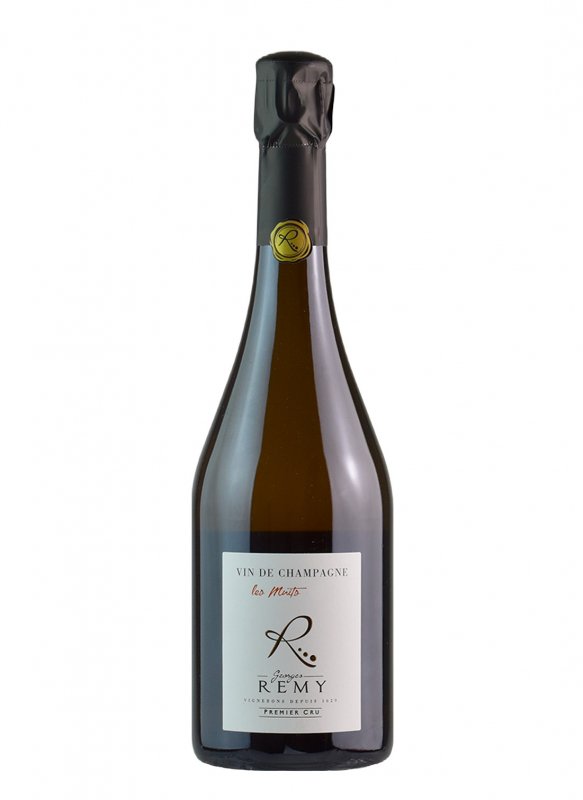
Description & elaboration
The Les Muits 2021 cuvée by Georges Remy is a vintage Premier Cru champagne. It is a champagne with notes of fresh citrus — toasted brioche — damp chalk, boasting a rare aromatic precision. On the palate, the texture is full and fleshy, supported by masterfully controlled oak ageing. A confidential edition produced in only 1,437 bottles.
The estate isolates a white grape variety here on a plot historically planted with black varieties. This atypical viticultural choice underlines the technical approach of Georges Remy. The absence of added sugar at disgorgement delivers a pure, unmasked expression. The chalky terroir thus speaks without filter.
The Terroir
The grapes come from the village of Tauxières-Mutry, classified Premier Cru. This commune stretches across the south-facing slopes of the Montagne de Reims, on the border of the Grand Cru terroir of Bouzy. The area has historically produced great red wines, including the celebrated Coteaux Champenois.
The vines flourish on the lieu-dit Les Muits, a plot planted in 1985. The exclusive presence of Chardonnay here constitutes a notable local distinction. The variety draws its resources from a predominantly clay-limestone soil.
The estate follows the principles of Organic Farming, certified by Ecocert for several years. The winemaker refuses synthetic treatments. Mechanical soil tillage replaces chemical inter-row weeding.
Natural ground cover preserves the aerated structure of the soil. The roots plunge deep into Campanian chalk, a porous subsoil that slowly releases water stored during winter rains, allowing the vines to draw moisture from depth throughout summer.
Winemaking
The cuvée is a Blanc de Blancs made exclusively from Chardonnay. Pressing takes place immediately after the manual harvest. Alcoholic fermentation starts spontaneously thanks to indigenous yeasts (yeasts naturally present on the grape skin).
The still wines are aged in 228-litre oak barrels. Georges Remy selects only second, third and fourth-use vessels, limiting the wood influence on the wine. Sulphur additions are kept to the strict minimum at every stage.
Malolactic fermentation is carried out in full on this harvest. The wines then rest on fine lees for nearly ten months. Over time, this extended contact softens the texture and lends it depth.
Bottling took place on 26 July 2022. The still wine undergoes no fining or filtration before the tirage.
Lees ageing continues in the underground cellars. The final dosage is 0 g/L at disgorgement. This Brut Nature respects the gustatory integrity of the harvest.
The 2021 vintage
The 2021 growing cycle began with devastating frost. The sub-zero temperatures of April impacted the young Champagne buds. Flowering then took place in highly unstable weather, with marked temperature swings in June.
The summer months recorded rainfall well above the ten-year averages. Persistent humidity demanded strict management of the vine canopy and an intensification of preventive treatments. Downy mildew severely threatened the overall yield of the appellation.
September brought more clement conditions. Late-season sunshine revived grape ripening. Harvest of the Les Muits plot began on 25 September 2021, from vine-sorted clusters showing a healthy sanitary profile.
The potential alcohol levels measured at harvest ensured a good final balance. This 2021 vintage stands out for its sharp mineral identity and its acidic structure, which guarantees a slow evolution in bottle — a natural parameter for long cellaring.
Tasting Notes
Appearance
The colour displays a pale gold hue with light straw highlights. The effervescence forms in a fine, regular bead, feeding a delicate, persistent collar of foam.
Nose
The first nose releases notes of toasted brioche and almond paste, a legacy of the extended lees ageing. Aeration reveals scents of fresh citrus and chalk, complemented by a subtle hint of gentle spice.
Palate
The attack is broad and generous, the fleshy texture carried by the oak ageing. The mid-palate unfolds a very straight mineral tension. The finish lingers on bitter lemon zest notes.

Food pairing suggestions

- Gougères with aged Comté
- Fine de claire oysters
- Sea bream tartare

- Roasted Bresse chicken
- Porcini mushroom risotto
- Seared scallops

- Aged Chaource
- Citrus tartlet
- Aged Brie de Meaux
The Plus de Bulles expert's opinion
Why I love it
What moves me here is the balance between a deep vinosity and an incisive saline freshness. I love its wild raspberry notes, its chalky texture and its lingering, pure finish.
My recommendation
Serve at 10–12 °C in a wine glass to fully appreciate its complexity. It will pair ideally with roasted poultry or veal sweetbreads.
Advice
How to store this champagne?
Plus de Bulles ships this bottle (75cl) in reinforced packaging specially designed for champagne transport. After receipt, store the bottle on its side, away from light, with the cork kept in permanent contact with the wine.
Ideally in a cellar; alternatively, in a cool, not too dry place at a stable temperature.
Ageing potential
The Les Muits 2021 by Georges Remy will evolve beautifully over time. The vintage's strong acidic structure allows for approximately 10 to 15 years of cellaring.
- Until 2031: the wine expresses a lively citrus freshness, carried by notes of yellow citrus and chalk.
- From 2032: the minerality softens to give way to indulgent aromas of praline and dried fruits.
- Around 2036: the wine will reach its peak, with spiced tertiary notes and a silky, melting texture.
Serving suggestions
Serve at 10–12 °C. Excessive chilling would block the expression of the autolytic notes. A tulip glass concentrates the citrus aromas, while a wide-bowled glass encourages a slow oxygenation of the wine.
A brief aeration in the glass will open up the wine's structure. Decanting is nonetheless inadvisable for this precise, chiselled profile: the effervescence would dissipate too quickly with prolonged air exposure.
An anecdote about this cuvée
Georges Remy vinifies his different lieux-dits separately to isolate each soil type. Enthusiasts can taste the Pinot Noir expression as a Blanc de Noirs to appreciate his mastery of black grape varieties.
The estate applies the same rigorous barrel-ageing approach across its entire range. Wine lovers will find a similar philosophy in this single-vineyard vintage Chardonnay cuvée produced from another classified area.
