


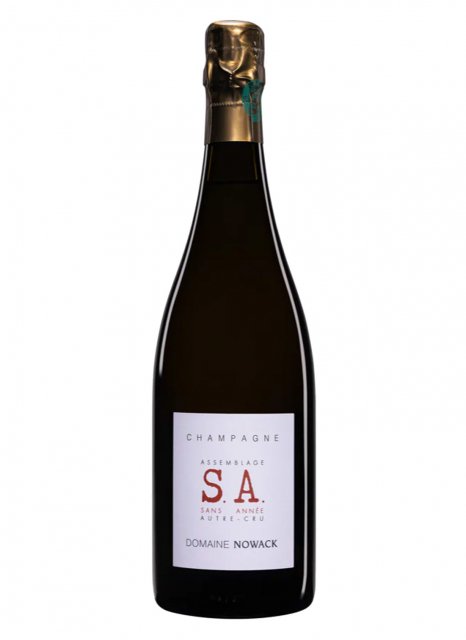


The S.A. cuvée by Flavien Nowack is a non-vintage blend of Pinot Meunier and Chardonnay grown on the slopes of Vandières. Aging entirely in oak creates a vinous aromatic profile with subtle oxidative notes. This 1.5-liter magnum is intended for gourmet pairings with full-flavored dishes or white meats.
The acronym S.A., standing for “Sans Année” (non-vintage), refers to a blended champagne that incorporates a Perpetual Reserve aged in large oak casks. The estate adheres to a philosophy of minimal intervention in winemaking.
The Production of Nowack Extra Brut S.A. Champagne
The Terroir
The Vandières vineyard stretches along the right bank of the Marne Valley. The slopes rest on clay-limestone soils mixed with fossilized marl and deep sands. These Lutetian geological formations ensure a stable water supply for the root system. This mineral substrate allows the vines to develop the tertiary aromas characteristic of the Coteaux de la Marne.
The clay retains winter precipitation, while the limestone ensures natural drainage in the spring. The presence of sand helps the soil warm up as soon as the first sunny days arrive. Flavien Nowack cultivates his ten hectares in accordance with the guidelines for biodynamic viticulture. The areas between the rows benefit from natural grass cover, managed through regular mechanical scarification.
Winemaking
The hand-harvested grapes undergo fractional pressing. Alcoholic fermentation begins without the addition of commercial yeast, thanks to the indigenous yeasts naturally present on the berries’ bloom. Gravity-fed transfer into barrels preserves the structure of the must as it exits the press. The juices ferment exclusively in small Burgundian French oak barrels that have been in use for several years, resulting in continuous micro-oxygenation of the free-run wine throughout the winter.
Flavin Nowack oversees malolactic fermentation, converting malic acid into lactic acid to soften the structure. Rigorous temperature monitoring in the cellar ensures that the fermentation processes proceed uniformly. The estate avoids filtration and fining before bottling, thereby preserving the texture of the wines.
The main harvest is blended with a proportion of wines from the Perpetual Reserve, which is aged in wooden vats. Aging on slats in the underground cellar triggers autolysis, enriching the wine’s body before disgorgement. Sealing with a crown cap limits gas exchange during the second fermentation.
The Base Year of the Blend
The growth cycle of each base year defines the specific character of the bottled batch. Weather conditions in the spring of 2021 decisively shaped bud development on the exposed plots. Summer sunlight and temperature conditions set the pace for ripening in the Vandières area. These annual parameters result in yields and musts with a unique balance in each bottling.
The vineyard teams perform manual leaf removal on the side facing the rising sun to ensure proper ventilation of the grape clusters. This aeration inhibits the growth of pathogenic fungi such as downy mildew. Systematic sorting on the receiving table removes any damaged berries upon arrival at the pressing center.
The harvest dates necessitate selective sorting in the vineyard to ensure only healthy grapes are placed in vats. The natural acidity preserved at harvest balances the richness imparted by extended aging in oak barrels. The main harvest provides a defining structure, conducive to beautiful aging in the cellar before opening.
Tasting of theExtra Brut S.A. Nowack in a magnum
Appearance
The color reveals a golden hue with amber highlights. The glass is filled with luminous nuances that catch the ambient light. The effervescence is characterized by fine, persistent bubbles rising in a steady stream.
Nose
The initial aroma reveals intense notes of ripe orchard fruits, with mirabelle plums at the forefront. Barrel aging imparts notes of toasted brioche and sweet spices. Prolonged aeration releases a chalky touch reminiscent of damp stone.
Palate
The attack on the palate is full-bodied, driven by the reserve wines. The wine offers a silky texture that coats the palate. The finish lingers with a refreshing, briny tension that irresistibly invites the next sip.

Pairing Suggestions

- Gougères with aged Comté cheese
- Smoked trout on toast
- Roasted cashews

- Roasted Poultry with Herbs
- Veal sweetbreads with morels
- Roasted cod fillet

- Aged farmhouse Chaource
- Thin Apple Tart
- 18-Month-Aged Comté
The Benefits of the Magnum
The 1.5-liter bottle alters the ratio between the volume of wine and the amount of oxygen present under the cork. This ratio slows the wine’s natural aging process in the cellar. This format promotes the prolonged release of aromas produced by the yeast. A magnum is equivalent to two standard bottles, enough to fill a dozen flutes at receptions.
Expert Opinion: More Bubbles
This cuvée harmonizes the influence of oak aging on the juices from the Marne Valley. The Perpetual Reserve system imparts a unique character to the house’s young vintages. Unlike the profile of a single-vineyard cuvée such as La Fontinette, this champagne brings together a mosaic of complementary vineyards. The 150-centiliter magnum bottle extends the aging potential of this vinous blend.
Storage and Serving Recommendations
How should this champagne be stored?
Store the magnum horizontally in a dark cellar. Avoiding direct light prevents “light-induced off-flavors,” a deterioration caused by ultraviolet rays. The ambient humidity should be maintained at around 70% to preserve the flexibility of the cork. A constant temperature of 10 to 12 degrees Celsius prevents harmful temperature fluctuations.
Aging Potential
Barrel aging and the proportion of lees support prolonged development in the bottle.
- Immediate tasting: The wine expresses its primary notes of pome fruits and citrus.
- Aromatic development phase (1 to 2 years): The champagne develops aromas of roasted nuts.
- Optimal maturity phase (3 to 5 years): The wine evolves toward deep notes of beeswax.
Serving Recommendations
Champagne should be served at a cool but not icy temperature. A tulip-shaped glass or a large wine glass channels the aromatic intensity toward the nose. Allowing the wine to breathe for a few minutes beforehand gives it time to release the esters from the Réserve Perpétuelle.
It is recommended to avoid placing the magnum in an excessively chilled bucket. Sudden cold freezes the structure and masks the nuances imparted by the oak. Gradual warming in the glass allows the aromatic profile to unfold.
Fun fact about this cuvée
Flavien Nowack manages the Réserve Perpétuelle in a 50-hectoliter oak cask. Since 2012, this cask has been replenished with 50% of the new harvest after each vintage. This gradual renewal ensures that the characteristics of older vintages are passed on to the newer wines.
