


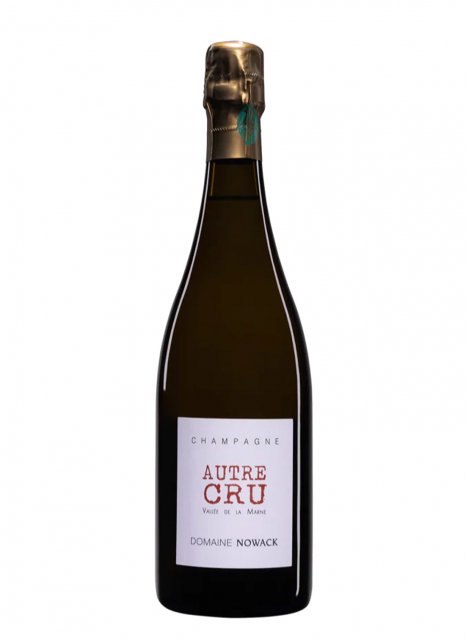


Autre Cru champagne showcases the technical expertise of Flavien Nowack, a winemaker based in Vandières in the heart of the Marne Valley. This 100% Pinot Meunier cuvée boasts a bold, full-bodied profile. Its sustained aromatic intensity pairs well with characterful white meats. This food-friendly wine belongs to the Blanc de Noirs family. The blend combines grapes from plots located outside the boundaries of his village. Its vibrancy appeals to palates seeking a bold alternative to the region’s classic expressions.
The Production of Autre Cru Nowack Champagne
The Terroir
The grapes are sourced from three distinct communes, all classified as “Autre Cru” on the Champagne cru scale. On the left bank, the Festigny sector is characterized by dense clay soils. These soils ensure consistent water retention during dry periods.
Further east, in Dormans, the vines face due south. The geological profile reveals an outcrop of marl. This subsoil stores solar heat during the day and releases it at night.
The third contribution comes from Vincelles, where the soil consists of permeable calcareous sands. Rapid drainage challenges the vines and naturally limits the yield per vine. The entire vineyard is managed according to the principles of biodynamic viticulture.
Winemaking
Alcoholic fermentation is initiated by indigenous yeasts in 228-liter French oak barrels, resulting in slow, gentle oxidation.
Malolactic fermentation is halted to preserve the natural malic acid and maintain acidity levels prior to blending. The blend consists of60% juice from the current vintage and 40% reserve wines stored in tanks.
Bottling takes place without fining or filtration. The bottles are then aged for 24 months on slats in the cellars, where a constant temperature regulates the development of the mousse.
A cuvée centered on recent harvests
The base year for this cuvée is 2022. The growing season saw a 20% rainfall deficit compared to the ten-year average. Summer temperatures exceeded 35°C on the hillsides. The harvest began on August 25 to halt the decline in total acidity. The low water reserves in the sandy soils exacerbated this natural water stress.
Sustained sun exposure thickened the berries’ skins and concentrated the tartaric acid. The harvest reached 10.5 degrees of potential alcohol at the time of picking. The juices fermented until all the initial sugars were consumed. The residual sugar level, which was virtually zero, ensures the wine’s clean profile in the bottle.
Tasting Notes for Autre Cru Nowack Champagne
Appearance
The color is a pale gold with coppery highlights. It comes alive with steady effervescence and a fine stream of bubbles.
Nose
Upon aeration, aromas of crisp pear emerge. The bouquet then unfolds into a delicate floral profile dominated by hawthorn. The empty glass releases a subtle chalky note evocative of the terroir.
Palate
The attack on the palate is clean and incisive. The texture gradually expands upon contact with the aging oak. The tasting concludes with a taut, lingering, and briny finish.

Pairing Suggestions

- Gougères with aged Comté cheese
- Iberian ham
- Sea bream tartare

- Roasted Chicken with Herbs
- Mushroom risotto
- Scallops

- Semi-aged Chaource
- Fruity 18-Month-Aged Comté
- Thin Apple Tart
The Expert’s Opinion: More Bubbles
This interpretation challenges the traditional conventions of the Marne Valley. The wine follows a vertical trajectory on the palate. Oxidative aging shapes the wine’s structure. The Brut Nature classification highlights the finished wine’s mineral austerity. This bottle is intended for Zero Dosage enthusiasts accustomed to oxidative profiles.
Storage and Serving Recommendations
How should this champagne be stored?
This bottle is shipped in specially designed shipping boxes. Upon delivery, store the bottle on its side to keep the cork moist. The storage temperature should be maintained between 10 and 12 degrees. The humidity level should ideally be around 80% to prevent premature evaporation. Storing the bottle in the dark eliminates the risk of a “light-induced” taste.
Aging Potential
The proportion of reserve wines enhances resistance to oxidation. The absence of dosage stabilizes the wine’s aromatic development over time.
- Immediate tasting: The acidity comes through with notes of yellow citrus and green apple.
- Aromatic maturity (within 3 years): The profile shifts toward nuances of slivered almonds and hazelnuts.
- Optimal maturity (3 to 5 years): The body becomes rounder. The nose reveals notes of forest floor.
Serving Recommendations
The ideal serving temperature is around 11 degrees. Serving it too cold causes the volatile compounds to solidify. Opt for a tulip-shaped glass with a wide rim: its opening allows carbon dioxide to escape, while its narrow top concentrates the aromas. Allowing the wine to breathe for 15 minutes before serving fully reveals its character.
Trivia about this vintage
The label features historical cadastral terminology. Several plots were classified as “Autre Cru,” indicating that grapes were sourced from areas beyond the commune where the winery is headquartered.
