
Description & elaboration
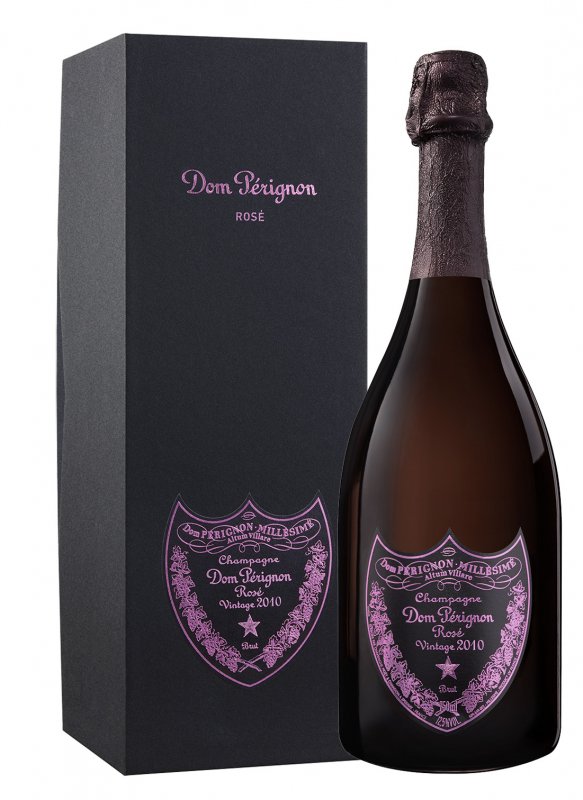
The Vintage Rosé 2010 cuvée from Dom Pérignon is a Brut blended champagne dosed at 5 g/L. It is a champagne with notes of wild strawberry, cocoa and gentle spices, set in a copper-rose robe with coral highlights. On the palate, the silky texture is immediately seductive, and the persistent finish pairs naturally with fine gastronomic cuisine.
The Terroir
The grapes come from a strict selection across Grand Cru-classified villages. Pinot Noir is rooted in the terroirs of the Montagne de Reims, at Bouzy, and in the Vallée de la Marne around Aÿ. The Chardonnay is sourced from plots in the Côte des Blancs, with a specific focus on Avize and Cramant. The vines flourish on Campanian chalk rich in belemnites, protected by the AOC Champagne. These sedimentary soils store winter moisture and allow the roots to draw water from deep underground.
This natural adaptation limits water stress in the vines during sweltering summers. The south and south-easterly exposure of the hillsides provides the sunlight needed for optimal ripeness. The topography of the plots also promotes drainage during heavy rainfall.
Vinification
The blend is composed of precisely 62% Pinot Noir and 38% Chardonnay. The free-run juices ferment in temperature-controlled stainless steel vats, followed by malolactic fermentation. Approximately 20% of the final blend is vinified as a still red wine.
This addition of still red wine gives the rosé champagne its copper hue and tannic backbone. The second fermentation in bottle — which creates the bubbles — is followed by ageing on laths in the cellar for one hundred and forty-four months. This extended contact with the yeast lees develops complex tertiary aromas of brioche, spices and cocoa bean. Disgorgement precedes the addition of a dosage liqueur at 5 g/L.
The 2010 vintage
The 2010 harvest began after a winter marked by notably sub-zero temperatures across Champagne. The vegetative cycle benefited from an early spring budbreak under dry conditions. The weather turned sharply at mid-August, when the equivalent of two months of rainfall fell within forty-eight hours. This sudden humidity, combined with the summer heat, triggered a devastating outbreak of botrytis on the Pinot Noir bunches.
This fungal pressure demanded an immediate response and ruthless sorting during the September harvest. Pickers set aside an unprecedented proportion of the crop, retaining only grapes with intact ripeness. This rigorous selection concentrated the aromatic profile of the musts ultimately chosen for the blend.
Tasting Notes
Colour
The robe displays a copper-rose with coral highlights. The wine reveals a luminous brilliance in the glass. A fine effervescence traces a steady stream of bubbles across the surface.
Nose
The nose opens on notes of wild strawberry and raspberry. Aeration progressively releases nuances of gentle spices and cocoa bean. Delicate aromas of peony and blonde tobacco leaf add further complexity to the bouquet.
Palate
The attack is fleshy, underpinned by a framework of fresh dark fruits. The velvety texture evolves smoothly towards a persistent finish with delicately chalky accents.

Food Pairing Suggestions

- Sea urchin with a touch of sumac
- Aged Iberian ham
- Sesame-crusted tuna tataki

- Spiced lacquered duck
- Saffron risotto with lobster
- Grilled red mullet fillet

- Fruity aged Parmesan
- Thin fig tart
- Extra-aged steamed Gouda
The Plus de Bulles Expert's Opinion
Why I love it
What moves me is its power wrapped in lightness. I was captivated by this spherical, dense palate — simultaneously silky and radiant — that surprises with its precision.
My recommendation
Serve at 10–11 °C in a wine glass, paired with pork belly or sea urchin.
Advice
How to store this champagne?
Plus de Bulles ships this bottle (75 cl) in its dedicated protective gift box, designed for both transport and ageing. Upon receipt, we recommend storing the bottle on its side, away from light — ideally in a cellar, or at the very least in a cool, not too dry place with a relatively stable temperature.
Ageing potential
The Vintage Rosé 2010 cuvée from Dom Pérignon has an ageing potential of approximately two decades. The structure provided by the blended still red wine forms the foundation for this extended evolution.
- Until 2028: the cuvée will display a vibrant tension carried by notes of wild strawberry and fresh raspberry.
- From 2029: the champagne will develop flavours of cocoa, gentle spices and blonde tobacco.
- Around 2035: the 2010 vintage will reach its tertiary peak, with hints of leather, undergrowth and truffle.
Serving suggestions
Serve at 11 °C, a temperature that unlocks the aromas without masking the Chardonnay's freshness. Opt for a wide-bowled tulip glass to encourage the wine to breathe. The aromas gain in precision after ten minutes of oxygenation in the glass.