




Description & elaboration
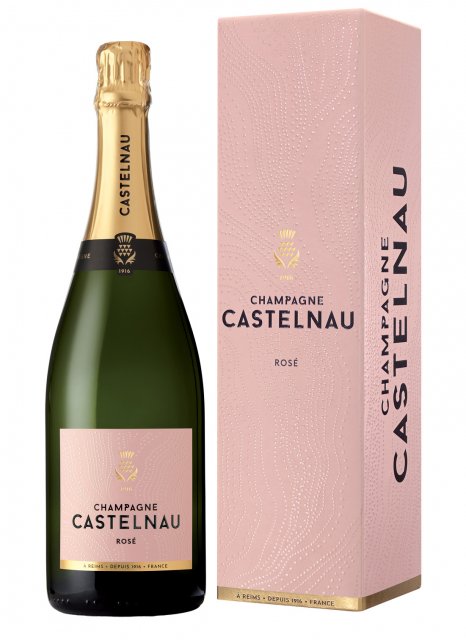
The Le Rosé cuvée from Castelnau is a blended champagne. It offers notes of raspberry and blackberry — with a tonic finish accented by grapefruit. On the palate, the texture is fresh and indulgent, ideal as an aperitif.
The Terroir
Meunier thrives in the Vallée de la Marne, where its roots explore clay-limestone soils with illitic marls. These soils retain moisture during summer drought periods, ensuring consistent grape ripeness.
Chardonnay comes from plots on Campanian Cretaceous subsoil, where the particularly porous outcropping chalk absorbs daytime heat and releases it at night. This natural thermal regulation promotes a crisp acidity and a beautiful mineral tension.
The Montagne de Reims is home mainly to Pinot Noir. The old vines, deeply rooted, naturally self-regulate their yields. The grapes thus achieve optimal concentration, essential to the colour richness of the red wines used in the blend.
Winemaking
Carine Bailleul, cellar master, oversees operations at the Reims winery. Harvesting is carried out by hand, in accordance with Champagne regulations, with whole-cluster pressing.
Alcoholic fermentation takes place in temperature-controlled tanks at around 18 °C. Malolactic fermentation is systematically carried out on all base wines, adding suppleness and roundness.
The skins of the black grape varieties macerate separately in small tanks. The blend then brings together white wines and red wines to build the final profile of the cuvée.
Maturation extends over a 24-month cycle. The wine then rests for a further three months in the cellar before release.
Blend Characteristics
The construction of this brut relies on a precise parcel selection. Meunier defines the central aromatic character of the cuvée, delivering primary aromas of summer fruits. Chardonnay structures the wine along a vertical, saline axis.
Pinot Noir underpins the overall framework through its tannic backbone.
The integration of reserve wines is a key step. Castelnau holds one of the largest reserve wine stocks in Champagne — these still wines, aged in stainless steel away from oxygen, soften the lively tension of the current year's harvest.
The region's continental climate brings significant annual variations. Reserve wines smooth out these meteorological disparities from one harvest to the next, ensuring consistency of flavour profile across successive releases.
Tasting Notes
Appearance
The Le Rosé cuvée displays a luminous hue with delicate salmon highlights. Fine bubbles feed a steady stream at the surface.
Nose
On the nose, a clear expression of red berries dominated by blackberry and raspberry. With aeration, notes of wild strawberry emerge.
Palate
The attack is marked by fruity indulgence and a lively, assertive finish. Notes of grapefruit elegantly extend the tasting experience.

Food Pairing Suggestions

- Courgette verrines
- Cured ham tapas
- Smoked salmon toasts

- Spiced Basque-style chicken
- Seasoned beef tartare
- Grilled red mullet with thyme

- Parmesan cream
- Raspberry macarons
- Strawberry tartlet
The Plus de Bulles Expert's Opinion
Why I love it
This rosé won me over with its immediate indulgence and its clear notes of red and black berries. I loved the surprise of grapefruit on the palate, bringing a remarkable balance and subtlety.
My recommendation
Serve at 10–11 °C in a wine glass. Ideal with courgette and parmesan cream verrines or Basque-style chicken with Espelette pepper.
Also worth discovering: another expression of rosé champagne.
Advice
How to store this champagne?
Plus de Bulles ships this bottle in its original case, in reinforced packaging specially designed for champagne transport. Upon receipt, we recommend storing the bottle on its side, away from light — ideally in a cellar, or at the very least in a cool, not too dry place with a relatively stable temperature.
Ageing Potential
The Le Rosé cuvée from Castelnau is ready to enjoy today. This bottle has an estimated cellaring potential of 3 to 5 years.
- Drink now: the aromatic profile reveals scents of fresh red fruits. Citrus notes appear from the first attack on the palate. The acidic backbone carries the wine for several seconds.
- After 2 years: the primary aromas evolve towards stewed fruit. Raspberry gives way to fleshy morello cherry. Subtle notes of kirsch add a further dimension to the nose.
- After 4 years: discreet hints of gentle spice emerge. The acidic backbone softens on the mid-palate. The effervescence becomes creamier over time.
Serving Suggestions
Chilling is best achieved in an ice bucket filled with water and ice, bringing the temperature down in around twenty minutes. A household refrigerator requires at least four hours. The target serving temperature is 9 °C in the glass.
A tulip-style glass channels the aromas towards the nose. An insulated sleeve slows the warming of the bottle once placed on the table. Rinsing the glass with plain water ensures the integrity of the bubbles — detergent residue disrupts the formation of the mousse.
A Note on This Cuvée
Winemaker Elisabeth Sarcelet historically laid the foundations of the house style. Working with red wines requires daily attention in the winery: mechanical pigeage of the cap gently extracts colour and structure. Extended ageing on the lees remains the true hallmark of the cellar.
This technical patience is reflected in the expertise behind the vintage Castelnau. The archives record regular sourcing from the surrounding historic hillsides, and the transmission of the original blending sheets ensures the continuity of the style.
