




Description & elaboration
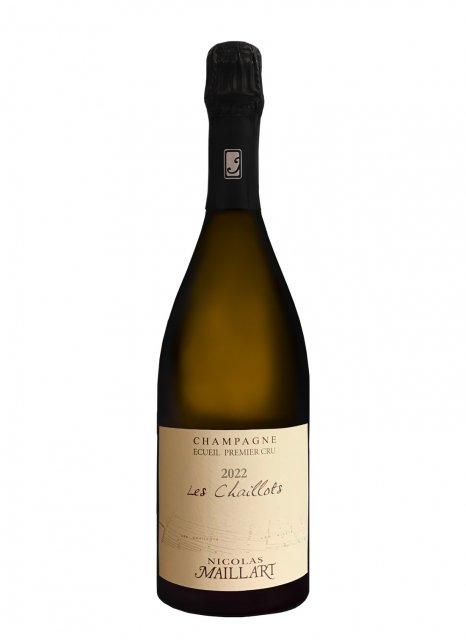
The Les Chaillots 2022 cuvée by Nicolas Maillart is a Blanc de Blancs champagne from the eponymous lieu-dit, on the Premier Cru terroir of Écueil. It is a champagne with notes of fresh hawthorn — toasted brioche — ripe stone fruits, with beautiful accessibility from the very first pour. On the palate, the chalky texture offers depth and a persistent saline finish.
The Terroir
The grapes come exclusively from the village of Ecueil en Premier Cru, on the slopes of the Montagne de Reims. This area is traditionally devoted to black grape varieties; Chardonnay remains a minority here, which gives the cuvée a singular character. The soil combines Ypresian marls and thick clay layers at the surface, beneath which Campanian chalk emerges. This geological duality retains rainwater effectively and filters it slowly, allowing the roots to draw from depth.
The full south-facing exposure ensures direct sunlight that promotes complete ripeness of the grapes. The vines come from a massale selection planted in 1963. These old vines yield clusters with concentrated aromas, with naturally controlled yields due to the age of the vines. The estate is certified Haute Valeur Environnementale.
Winemaking
After pressing, the winemaker separates the first musts (cuvée juice, from the first press). Alcoholic fermentation takes place in French oak barrels, an eight-month ageing under wood that promotes measured exchanges with oxygen, softens the wine's structure and lends it aromatic breadth. Malolactic fermentation is deliberately blocked, preserving the vintage's natural acidity.
The Blanc de Blancs then rests on laths in the cellar. The autolysis of the yeasts (prolonged contact between the wine and the dead yeasts after second fermentation) gradually enriches the body and imparts a characteristic silky texture.
The must undergoes neither filtration nor fining beforehand. The cuvée is an Extra-Brut: a dry, lively profile.
The 2022 vintage
The 2022 growing season was marked by scorching summer temperatures and sunshine levels above decade averages. The vegetative cycle proceeded without disease; June rains replenished water reserves before a summer with a marked rainfall deficit. Continental winds dried the clusters before harvest, which began as early as the end of August.
The clusters were in a sanitary condition free of botrytis. The clay substrate regulated water supply across the plots, allowing the vines to maintain their tartaric acid levels and preserve the balance between sugars and total acidity.
The vintage yielded rich, concentrated juices, with advanced aromatic maturity and a clean backbone — a profile that gives this cuvée a strong ageing potential.
Tasting Notes
Appearance
The robe reveals a luminous pale gold colour, animated by a regular stream of delicate bubbles.
Nose
On the nose, the wine expresses a rich pastry-like character. Stone fruit aromas dominate the first nose, followed by yellow fruit notes with subtle woody touches. With aeration, notes of sweet almond and spice emerge.
Palate
On the palate, this champagne presents a vinous attack that extends into a long, saline finish with chalky nuances. The minerality brings a persistent freshness at the end of the tasting.

Pairing suggestions

- Gougères with aged Comté
- Scallop carpaccio
- Smoked salmon toasts

- Roasted line-caught sea bass
- Poularde in cream sauce
- Mushroom risotto

- Aged farmhouse Chaource
- 18-month Vieux Comté
- Thin apricot tart
The Plus de Bulles expert's opinion
Why I love it?
I was captivated by the tension of this single-plot expression. Its precise palate, balancing ripe citrus and chalky minerality, delivers a saline persistence that is absolutely remarkable.
My recommendation
Serve at 10–12 °C in a wine glass to release the aromas. It will pair beautifully with line-caught sea bass or fine shellfish.
Advice
How to store this champagne?
Plus de Bulles ships this bottle (75 cl) in reinforced boxes specially designed for transporting champagne. After receipt, store the bottle horizontally, away from light. Ideally in a cellar; if not, in a cool, not too dry place at a stable temperature.
Ageing potential
The Les Chaillots 2022 by Nicolas Maillart is structured to evolve in bottle over approximately fifteen to twenty years. Its profile gains in tertiary complexity over time.
- Until 2032: the cuvée will offer beautiful freshness with notes of candied citrus.
- From 2033: the champagne will evolve towards elegant toasted pastry notes.
- Around 2042: the Les Chaillots 2022 cuvée will reach its aromatic maturity with honeyed notes.
Serving advice
This bottle is best served at 10–12 °C. A wide-mouthed white wine glass encourages oxygenation and concentrates the aromas.
An anecdote about this cuvée
The plant material planted in 1963 represents a rare viticultural heritage: the estate's founder personally grafted the cuttings from historic vine stocks himself, thereby preserving a genetic diversity that the house's technical sheet highlights. This parcel-driven philosophy is also reflected in the Premier Cru Montchenot by Nicolas Maillart.
Nicolas Maillart's commitment to showcasing northern terroirs leads him to isolate each micro-plot of the estate individually, as illustrated by this vintage cuvée made from pure petit meslier.
