
Description & elaboration
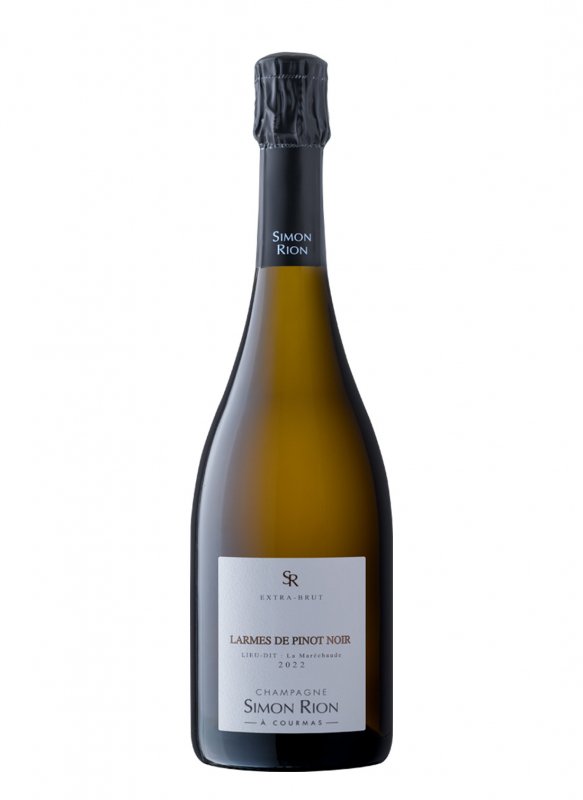
The Larmes de Pinot Noir 2022 cuvée from Simon Rion is a champagne from the Vallée de l'Ardre. This is a champagne with notes of ripe mirabelle plum, gentle spices and toasted bread. On the palate, the attack is broad and vinous, carried by a chalky backbone that extends the finish. Its generous structure makes it an ideal champagne for fine dining.
This cuvée is produced in only 1,062 numbered bottles.
Pinot Noir thrives here on an ancient limestone subsoil. The vine roots plunge deep into the rock, giving the wine a pronounced vinosity.
This single-vineyard edition shines a light on a little-known terroir. Oak ageing shapes the texture, while artisanal winemaking preserves the integrity of the fruit.
The Terroir
The grapes come exclusively from the commune of Courmas, on the lieu-dit Les Maréchaudes. This terroir is spread across two plots of thirteen ares, planted in 1984 and 1987.
The advanced age of these vines naturally limits yields: the bunches are small and highly concentrated. The silt-dominated soil nourishes the plant and imparts a marked structure.
The south-west-facing aspect ensures direct afternoon sunlight, promoting berry ripeness. Regular winds protect the bunches from lingering humidity and limit the development of fungal disease.
Winemaking
Simon Rion crafts this Blanc de Pinots Noirs entirely by hand. Alcoholic fermentation is initiated with indigenous yeasts (naturally present on the grapes), and the must undergoes full fermentation in oak barrels. This time in wood brings the wine its toasted bread notes and enveloping texture.
The still wine (non-sparkling base) rests eleven months on its full lees. Complete malolactic fermentation — the conversion of malic acid into lactic acid — softens the structure and adds roundness. This extended ageing enriches the body of the future champagne.
Ageing on lees in the bottle extends for thirty months. This maturation develops the autolytic aromas (brioche, toasted bread, hazelnut) characteristic of prolonged lees contact.
The 2022 vintage
The year 2022 passed without any major climatic incident in Champagne. Data from the Comité Champagne points to generous yields. The mild winter encouraged early budburst, and spring frosts spared this part of the valley.
The hand-picked harvest benefited from a very dry summer, punctuated by targeted rainfall in August. The harvested bunches were in remarkable condition; sorting in the vineyard removed the rare shrivelled berries.
The fruit accumulated sugars throughout the summer period, while cool nights preserved the acidity. This continental climate produced dense musts with a very satisfying potential alcohol level.
This natural concentration provides ideal support for barrel ageing. The mineral tension balances the richness of the vintage, and the very low dosage produces a dry profile that highlights the character of the year.
Tasting Notes
Appearance
The golden robe displays a hue with coppery highlights, hinting at the extended cellar ageing. A very fine effervescence animates the wine in the glass, with a regular bead of bubbles at the surface.
Nose
The nose opens on an intense, fruity bouquet. Elegant notes of ripe mirabelle plum come to the fore; the oak ageing reveals scents of toasted bread, and aeration releases delicate hints of acacia honey.
Palate
On the palate, the attack is broad and vinous, reminiscent of a light red wine. Gentle spices emerge mid-palate, before a chalky backbone stretches the finish.

Food Pairing Suggestions

- Comté gougères
- Duck breast toast
- Aged Iberian ham

- Spiced roast pigeon
- Pan-fried veal sweetbreads
- Chicken supreme

- Aged Vieux Comté
- Creamy Chaource
- Thin apricot tart
The Plus de Bulles Expert's View
Why I love it
What moves me about this cuvée is its luscious texture and intensity. I was captivated by its wild raspberry bouquet and its savoury finish, which delivers a vinosity that is both frank and wonderfully elegant.
My recommendation
Serve at 10–11 °C in a wine glass to allow the aromas to open up fully. It pairs beautifully with duck breast or a red berry dessert.
Serving & Storage Tips
How to store this champagne?
Plus de Bulles ships this bottle (75 cl) in reinforced packaging specially designed for champagne transport.
Upon receipt, we recommend storing the bottle on its side, away from light.
Ideally in a cellar, or at the very least in a cool, not too dry place with a relatively stable temperature.
Ageing Potential
The Larmes de Pinot Noir 2022 cuvée from Simon Rion will develop very favourably well beyond 2027. Its acidity and concentration allow for approximately fifteen to twenty years of cellaring.
- Up to 2032: the bottle displays notes of ripe citrus and mirabelle plum, with a beautiful mineral tension.
- From 2033: over the years, aromas of candied fruit and gentle spices develop.
- Around 2042: the cuvée reaches its peak, with tertiary touches of undergrowth, truffle and beeswax.
Serving Suggestions
A serving temperature of 11°C is recommended. Opt for a red wine glass: its wide bowl allows the oak aromas to express themselves fully. Twenty minutes of oxygenation will unlock the cuvée's full potential.
Contact with the air softens the acidic backbone and gradually releases the tertiary aromas. The last sips, warmed in the glass, will prove particularly dense and rich.
A Note on This Cuvée
This exclusive edition comes from very isolated plots in the Vallée de l'Ardre. The roots of the old vines penetrate the geological strata to draw water from deep below.
The soil is worked mechanically, with no synthetic herbicides. This practice stimulates the microbial life of the limestone soils and limits erosion during heavy autumn rains.
The oak ageing contrasts with the signature style of the Simon Rion range: his other wines generally favour stainless steel tank ageing. This single-vineyard winemaking approach draws closer to Burgundian methods.
The absence of filtration keeps fine particles in suspension, preserving the wine's complexity. This bottle from the Vallée de l'Ardre offers an alternative to the finesse of the Montagne de Reims Pinot Noir.
