
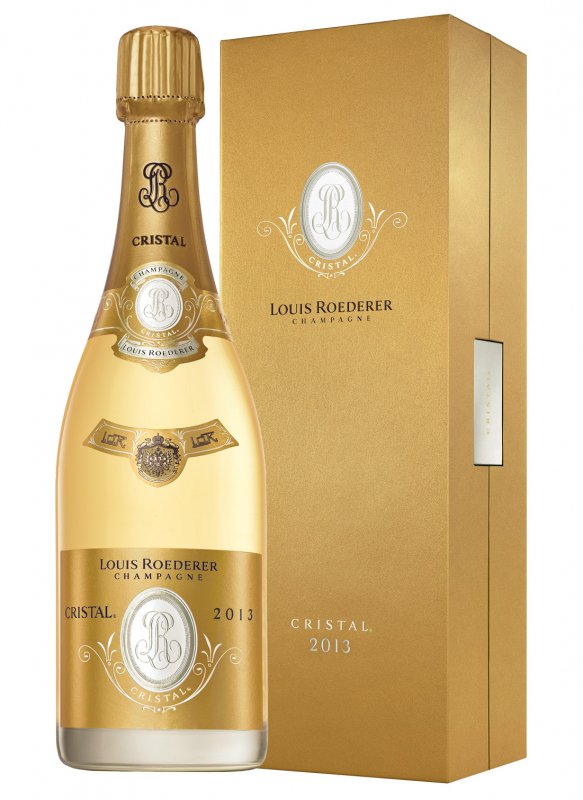
Description & elaboration
The Cristal 2013 cuvée from Louis Roederer is a vintage champagne born from a rigorous selection of Champagne's finest terroirs. It is a champagne with notes of vine peach, fresh almond and white pepper. On the palate, the texture glides with remarkable fluidity.
This magnum comes in an elegant gift box. The parcel-by-parcel approach of Louis Roederer is evident at every stage of its elaboration.
The Terroir
The vines spread across forty-five individual plots located across seven Grands Crus between the Montagne de Reims, the Côte des Blancs and the Vallée de la Marne. The Vallée de la Marne supplies the Pinot Noirs from Aÿ, while the Montagne de Reims contributes those from Verzenay and Verzy. The Côte des Blancs completes the blend with Chardonnays from Avize and Mesnil-sur-Oger. All of these plots hold Grand Cru status.
The subsoil rests on outcropping Campanian chalk, which forces the roots to plunge deep into the ground. This root network captures moisture trapped within the limestone during dry summers. This distinctive geology imparts a high concentration of mineral salts to the grapes.
The chalky rock absorbs daytime heat to warm the vine roots at night. The vineyard is managed according to biodynamic principles to stimulate microbial life in the soil. The estate holds Haute Valeur Environnementale and Viticulture Durable en Champagne certifications.
Plant-based preparations replace systemic treatments. Natural ground cover between the rows limits erosion and regulates vine vigour.
The vinification
Cellar master Jean-Baptiste Lécaillon oversees the blend of 60% Pinot Noir and 40% Chardonnay. Around 32% of the juices ferment in traditional oak foudres, allowing a gentle, progressive aeration that softens the wine's structure.
Malolactic fermentation is blocked across all tanks. This decision preserves the malic acid naturally present in the grapes, maintains a low pH and supports the structural vibrancy of the wine over the long term.
Ageing on the lees extends over several years. Regular riddling consolidates the sediment in the neck before disgorgement.
After disgorgement, the bottle benefits from eight months of rest. The addition of the dosage liqueur brings this meticulous elaboration to a close.
The 2013 vintage
The 2013 growing season was marked by a significant vegetative delay. The cold spring pushed back budburst, and flowering was not complete until July. A persistent high-pressure system then reversed the trend.
The intense summer heat compensated for the difficult start to the year. Low rainfall dried out the hillsides and halted disease pressure. The grapes reached full phenolic maturity at harvest, yielding juices of remarkable clarity.
The autumn harvest unfolded under cool temperatures, preserving the primary aromas. Measured yields concentrated the material at the heart of the berries.
The clear wines from this harvest display a sharp acidity. This late vintage is distinguished by its linear profile.
Tasting notes
Appearance
The colour is golden with luminous reflections. The effervescence is particularly fine and regular, forming a persistent bead in the glass.
Nose
On the nose, one discovers a powerful and complex bouquet. Yellow fruits — mirabelle plum, candied orange zest — intertwine with an impression of vine blossom and damp chalk.
Palate
On the palate, this champagne reveals a tactile and generous texture. A mineral directness quickly asserts itself while melted tannins draw the wine towards a vibrant finish.

Food pairing suggestions

- Gougères with aged Comté
- Sea bream tartare
- Chicken croquettes

- Butter-roasted turbot
- Roasted veal medallion
- Porcini mushroom risotto

- Aged Chaource
- Thin apricot tart
- Mountain Beaufort
The advantages of the magnum
This 1.5-litre format provides the optimal environment for slowing oxidation. The volume of air beneath the cork remains the same as in a standard bottle, but interacts with twice the wine — a ratio that naturally slows aromatic evolution. The quantity served corresponds to twelve tasting flutes. The packaging includes a rigid gift box to protect the bottle during handling.
The Plus de Bulles expert's opinion
Why I love it
I was won over by the tactile and serene character of this cuvée. Its powdery bouquet of mirabelle plum and toasted hazelnut stretches across a vibrant chalky freshness, blending suave density with wonderful sapidity.
My recommendation
Serve it at 10–12 °C in a wine glass to release its energy. This great wine can be cellared until 2046.
Advice
How to store this champagne?
Plus de Bulles ships this magnum in reinforced cartons specially designed for champagne transport. Upon receipt, we recommend storing the magnum horizontally, away from light. Ideally in a cellar; alternatively, in a cool, not too dry place at a stable temperature. The gift box provides additional protection against temperature variations.
Ageing potential
The blocking of malolactic fermentation gives this wine a structure well-suited to ageing. This magnum has an ageing potential of approximately 20 years.
- Until 2028: the cuvée will offer floral notes and a frank tension.
- From 2029: the champagne will evolve towards aromas of toasted pastry.
- Around 2033: the 2013 vintage will enter its patina phase with gentle spices.
Serving suggestions
The ideal serving temperature is between 10–12 °C. Excessive cold numbs the volatile compounds on the nose. Decanting risks dissipating the carbon dioxide too abruptly. Opt for wide-bowled glasses to allow oxygen to release the citrus notes after a few minutes.
An anecdote about this cuvée
Tsar Alexander II commissioned the first editions of this wine in the nineteenth century. The Russian sovereign insisted on the use of a transparent flat-bottomed glass to detect any potential poisons or explosives. The house today crafts this homage to the vintage blanc de blancs chardonnay.
The Rouzaud family continues to lead the house. They also oversee the still expression of Roederer's pinot noir. All supplies are controlled to meet the house's internal specifications.

 What customers liked most