
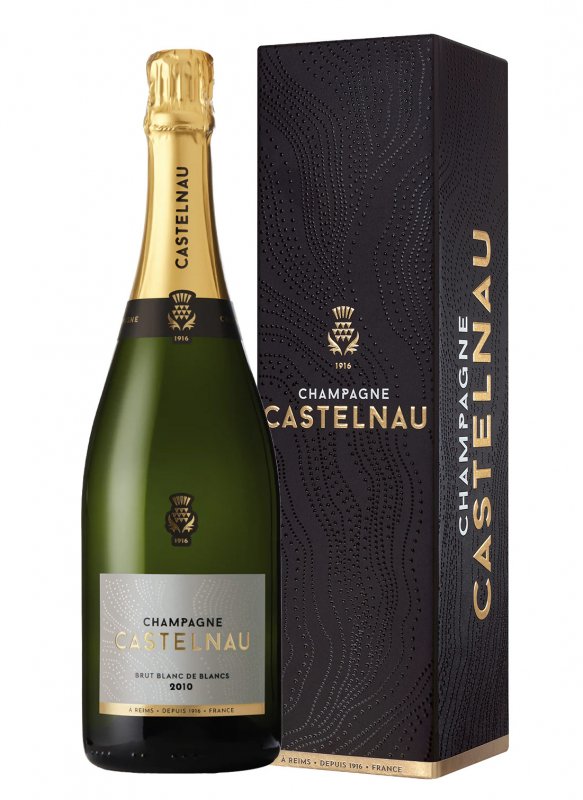
The 2010 Blanc de Blancs cuvée from Champagne Castelnau is an invitation to indulgence and fulfillment. After a long slumber of more than a decade in the cellar, this 100% Chardonnay reveals a dazzling maturity. Far from the classic standards, it draws its originality from atypical terroirs such as Trépail and Vitryat. Cellar Master Carine Bailleul has created a velvety, pastry-like wine with a finish that irresistibly evokes Paris-Brest. A gastronomic vintage for lovers of rich and complex wines.
The production of Blanc de Blancs 2010
This champagne is 100% Chardonnay, but its blend is unique. While the Côte des Blancs is represented, the majority of the grapes come from the Grande Montagne de Reims (notably the Trépail cru, renowned for its structured Chardonnays), as well as Vitryat and Sézannais.
Le Temps Long
The philosophy of Maison Castelnau is based on time. The bottles were "almost forgotten" in the cellar for a minimum of 5 years (and much longer for this 2010 vintage), giving the wine time to soak up the lees and develop a mysterious chemistry. The dosage is Brut, at 6 g/L, providing just the right amount of roundness to highlight the wine's pastry-like character.
The 2010 vintage
2010 was a year of contrasts in Champagne, often demanding. However, the Chardonnays came out on top, offering beautiful freshness. Over time, this vintage has acquired a remarkable patina, transforming its initial liveliness into an aromatic complexity focused on dried fruits and sweet spices.
Tasting notes
Color
The color shines with an intense jewel-like gold. The bubbles are lively, delicate, and persistent.
Nose
The nose is very expressive, reminiscent of a basket of dried fruits and nuts: hazelnuts, almonds, figs, dates, and raisins. When aerated, a poetic note appears, evoking the smell of rain on warm summer earth (petrichor).
Palate
The attack is elegant and velvety. The palate reveals toasted aromas and sweet spices, the signature of the Cellar Master. The finish is a model of indulgence: it is reminiscent of Paris-Brest, with flavors of choux pastry, praline, and hazelnut cream.

Serving suggestions

- Pan-fried foie gras with figs
- Scallops with almonds
- Cream of chestnut soup

- Mushroom risotto
- Bresse chicken with cream sauce
- Braised sweetbreads

- 24-month aged Comté cheese
- Paris-Brest (perfect pairing)
- Praline tart
Storage and serving recommendations
Aging potential
This wine is designed to be enjoyed for its maturity and complexity:
- 2026–2028: The wine offers a delicious fullness, with notes of praline and dried fruit (maturity phase).
- 2029–2032: It will evolve towards more pronounced notes of mocha, roasted coffee, and spices (complexity phase).
- Beyond 2033: Reserved for lovers of old vintages, with deep tertiary notes.
Serving suggestions
Serve this great vintage between 46°F and 48°F. Its aromatic richness requires a large glass to fully express itself and reveal its subtle notes of "summer rain."
Anecdote about this cuvée
The sensation of "warm summer rain" described on the nose has a scientific name: petrichor. This rare and fleeting olfactory note in wine comes from the complexity of Chardonnays aged on lees for over a decade, creating an alchemy between the minerality of the soil and the patina of time.
