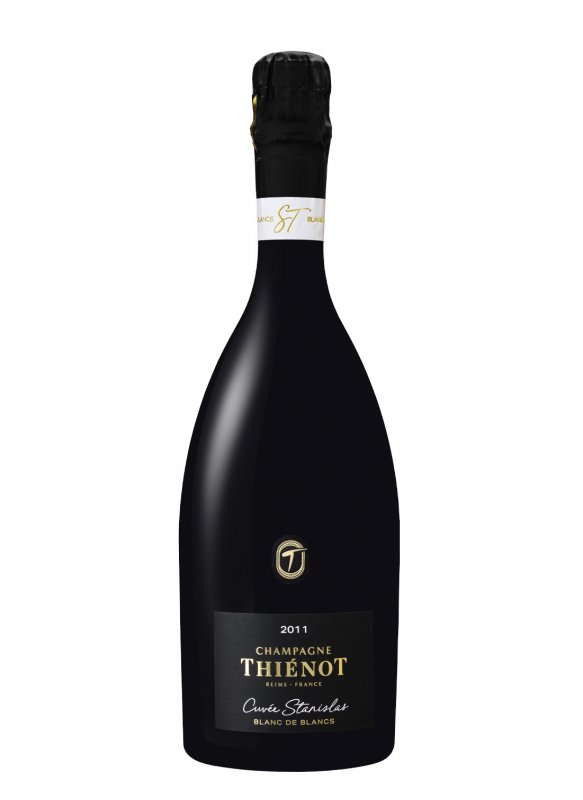
The Stanislas 2011 cuvée from Maison Thiénot is a vintage champagne. When time joins forces with great white grapes, it weaves together maturity, freshness and generosity in perfect harmony.
This is a cuvée built around citrus and white orchard fruit, lifted by a delicate floral touch. Its structure remains wonderfully light on its feet, carried by a mineral tension that gives it real drive.
This is a bottle you can pour from the aperitif onwards, alongside comté gougères for instance, before bringing it to the table with a sole meunière. Only 5,500 bottles of this cuvée were produced.
The Terroir
The Stanislas 2011 cuvée is a Blanc de Blancs, meaning it is made exclusively from Chardonnay.
These Chardonnay grapes come from across the whole of the Champagne vineyard, where Maison Thiénot tends its vines. This broad origin allows the house to craft a wine from the full diversity of the region's terroirs, rather than relying on a single area.
Chardonnay lends the wine a lively tension and a finesse that shape the character of the 2011 vintage, while letting the purity typical of this white grape variety shine through.
Winemaking
Nicolas Uriel, the cellar master, chose to vinify this 100% Chardonnay entirely in stainless steel tanks, to preserve the purity of the fruit before any further work. Malolactic fermentation was carried through completely, which softens the acidity and brings a velvety texture to the palate. At Thiénot, this Stanislas 2011 cuvée was laid down in the cellar in September 2012, marking the start of a long rest that allows the aromas to build quietly, developing notes of ripe fruit characteristic of this vintage. The dosage, set at 4 g/L, classes this champagne as Extra Brut: a pared-back dosage that gives full room to the freshness of the Chardonnay without ever weighing it down. This precision at every stage, from tank to bottling, bears the hallmark of winemaking designed to reveal the finesse of the grape rather than mask it.
The 2011 Vintage
In 2011, spring in Champagne was exceptionally mild and dry, triggering flowering three weeks ahead of the average — something unseen since 1822. This lack of water pushed the vines to draw on deeper reserves, while a few light summer showers kept the grapes healthy without hindering ripening. An alternation of cool nights and warm days then encouraged optimal ripeness, conditions that observers judged particularly favourable for Chardonnay. The grapes reached harvest healthy and well-ripened, picked early, giving this 2011 cuvée a character that is both taut and vibrant, true to this rare vintage.