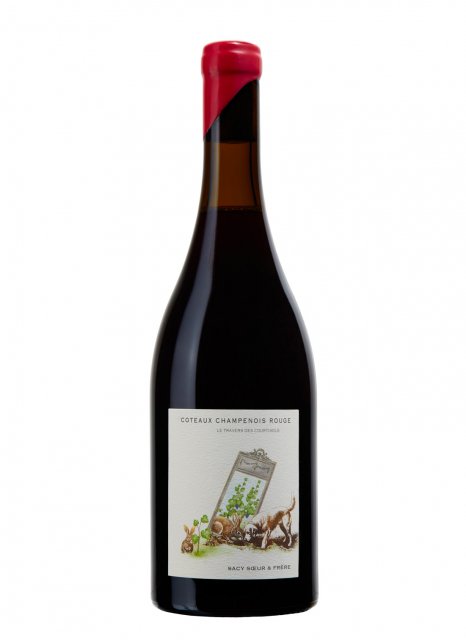


Le travers des Courtisols Rouge 2023, made by Maison Sacy Soeur & Frère, is a red wine.
This is a cuvée built around red fruit, with a touch of spice and a crunchy freshness. The texture is vinous, with a lovely roundness on the palate.
It's a bottle you can pour at aperitif time, alongside comté gougères, say, before bringing it back to the table with roast pigeon and cherries. Only 400 bottles were made.
Le Terroir
Le travers des Courtisols Rouge 2023 is a single-variety red, made entirely from Pinot Noir.
The Pinot Noir comes from the Courtisols terroir, a Grand Cru parcel (the highest rung of the Champagne cru ladder) on the Montagne de Reims, where Domaine Sacy Soeur & Frère tends its vines.
The parcel sits at the top of the slope. At that height the vines get the full benefit of the light and air moves more freely between the rows, so the grapes ripen while holding on to their freshness, giving the wine a lively balance rather than heavy ripeness.
On this terroir, Pinot Noir brings red fruit and structure to the wine.
This cuvée comes from organic farming: vines grown without pesticides or synthetic chemical fertilisers.
La vinification
Jonathan Sacy, winemaker at Maison Sacy Soeur & Frère, made a clear choice for Le travers des Courtisols Rouge 2023: to let malolactic fermentation run its full course. This second fermentation turns the grape's sharp acidity, similar to that of a green apple, into a softer acidity, closer to that of milk. Here it was carried through to completion and not blocked.
In the glass, this decision rounds off the acidity and brings silkiness: the palate gains roundness, where blocking the fermentation would have preserved tension and bite. For this Pinot Noir, the cuvée's only grape variety, it is a choice for softness over zip, making the wine more supple from the very first sips.
Le millésime 2023
In 2023, the weather was changeable. A very wet spring, welcome after a winter that had done little to replenish the soils, was followed by a patchy summer, then a warm start to September. That late-season heat concentrated the Pinot Noir berries.
The grapes reached phenolic ripeness (the point at which the fruit is fully balanced, even with a little less sugar), with a satisfying acidity and generous bunches. The resulting style is clear-cut: the year gave the cuvée pure fruit, with no green notes, and a lively freshness.