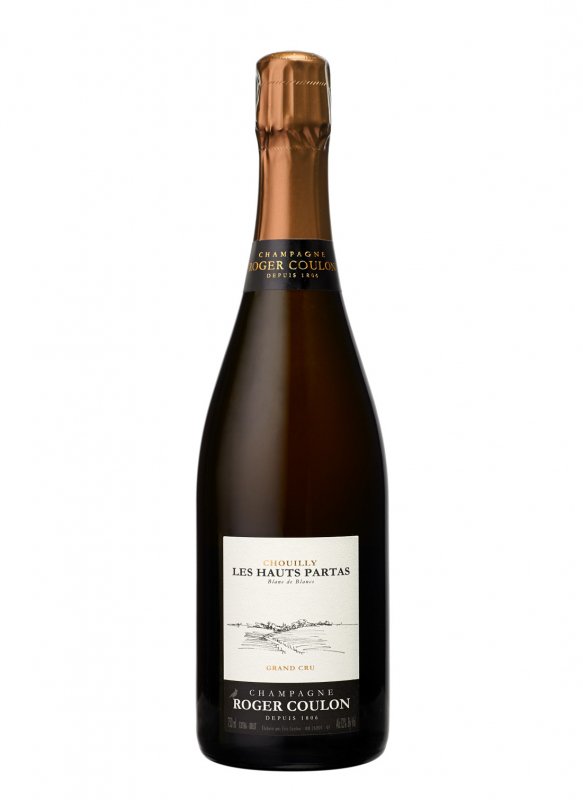
Les Hauts Partas 2019 from Roger Coulon is a Blanc de Blancs champagne. It is made exclusively from Chardonnay, with no Pinot Noir or Meunier.
This vintage champagne comes from a single plot in Chouilly, a Grand Cru village on the Côte des Blancs, at 150 m above sea level and facing north-east. Its 45-year-old vines sink their roots deep into the chalk, giving the wine a mineral tension.
This is a cuvée built around white fruit and citrus, with a vinous structure (broad, with real body) that, with age, develops towards brioche. It is a bottle you can open at aperitif time, with cheese gougères for instance, and then bring back to the table alongside a sole meunière.
Le Terroir
The Hauts Partas 2019 cuvée is a Blanc de Blancs, meaning it is made solely from Chardonnay.
These Chardonnay grapes come from the terroir of Chouilly, a village ranked Grand Cru (the highest tier on the cru classification) on the Côte des Blancs, where Roger Coulon tends his vines.
This sub-region takes its name from the prominence of the white grape variety here. A Blanc de Blancs therefore finds its natural home: the entire cuvée comes from a single village and a single grape variety, giving the wine a very clear sense of origin.
On this terroir, Chardonnay brings finesse and freshness to the wine.
La vinification
Edgar and Louise Coulon chose to age this 2019 Chardonnay in barrel. This choice of vessel gives the wine toasty, oaky notes that weave into the fruit and enrich its texture.
They then let malolactic fermentation run its full course. This second transformation, which turns the wine's sharp acidity into a softer one, rounds out the palate and lends it a velvety quality.
The wine was left Brut Nature, that is non-dosé: no sweetened liqueur is added. Nothing softens the finish, and the Chardonnay is shown in a straight, clean and precise expression, without artifice.
Le millésime 2019
On the Côte des Blancs, in the Chouilly terroir, 2019 was a year of contrasts: spring frosts, cool weather until mid-June, then heatwaves in July and August. This heat produced thick-skinned grapes, very rich in sugar, despite lower yields. September then brought sunshine and cool nights: the bunches completed their ripening without losing their acidity (the natural liveliness of the grape, which gives the wine its drive). For this Chardonnay, the 2019 climate left a style that is both generous and taut, with ripe fruit carried through to a clean freshness on the finish.