
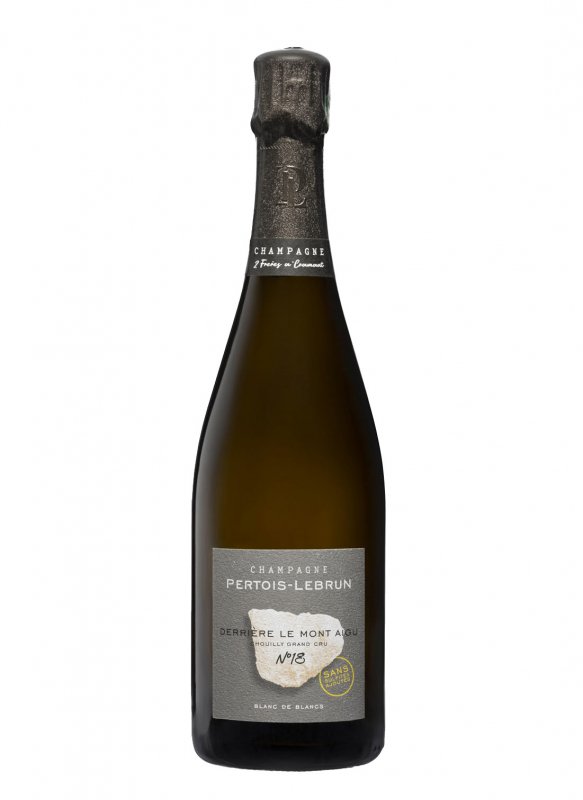
Pertois-Lebrun's Derrière Le Mont Aigu No. 18 is a confidential micro-cuvée, with only 1,335 bottles produced. This Blanc de Blancs Grand Cru, from a single plot in the Chouilly terroir, is a free and natural interpretation of the 2018 vintage. Vinified without any added sulfites and aged partly in sandstone vats, this Brut Nature reveals a dazzling purity of fruit and an unfiltered expression of Chardonnay. It is a lively, expressive, and fruity wine, intended for lovers of signature champagnes seeking an authentic experience.
The production of Derrière Le Mont Aigu n°18 Pertois-Lebrun
This champagne is made exclusively from the "tête de cuvée" (the first pressings), guaranteeing the finesse of the juices. The vinification process is unique: after alcoholic and malolactic fermentation, the wines are aged on fine lees for 10 months. The aging process is mixed, divided between oak barrels (60%) for patina and structure, and sandstone vats (40%) to preserve the energy and purity of the fruit. A rare and demanding process, this cuvée benefits from natural clarification: it has undergone no fining, no filtration, and above all, no addition of sulfites.
The Terroir
The grapes come exclusively from the cadastral locality known as "Derrière Le Mont Aigu, " located on the Grand Cru of Chouilly. This specific plot benefits from deep soils and an exposure that promotes full ripeness. Soil cultivation and a respectful approach to living organisms allow the mineral and solar essence of this Côte des Blancs terroir to be captured.
Aging
This limited edition was bottled on July 17, 2019. The bottles were then left to rest on slats for five years in the cool cellars. Disgorging took place on June 21, 2024, without any dosage (Brut Nature), allowing the wine to express itself in its purest form.
Edition No. 18 (Base 2018)
Edition No. 18 corresponds to the 2018 vintage, a year that will be remembered for its generosity in terms of both quality and quantity. Thanks to soil saturated with water in winter and constant sunshine during ripening, the growing season went smoothly. The phenological stages followed one another at a steady pace, resulting in impeccable health and exceptional harvest potential, combining aromatic richness and abundance.
Tasting notes
Color
The color is a bright, dense gold. The effervescence is creamy, reflecting the richness of the unfiltered material.
Nose
The nose is immediately expressive and charming. It opens with generous notes of ripe yellow fruit and orchard fruit, underscored by a mineral purity and a subtle spicy touch from the oak and sandstone.
Palate
On the palate, the wine is fruity and full-bodied. The texture is tactile and precise, without the austerity sometimes associated with non-dosage wines. The absence of sulfites offers a rare aromatic freedom, with a finish that is clean, pure, and vibrant.

Serving suggestions

- Scallop carpaccio
- Radishes with salted butter
- Plain gougères

- Sole meunière
- Veal tartare with hazelnuts
- Steamed cod fillet

- 18-month fruity Comté
- Summer Beaufort
- White peach salad
Storage and serving advice
How should this champagne be stored?
This cuvée is delivered in bottles. Produced without added sulfites, it is particularly sensitive to oxidation and light. It is crucial to store it in total darkness, lying down, in a cool (10-12°C) and perfectly stable cellar. Careful storage is key to preserving the brilliance of this natural wine.
Aging potential
Derrière Le Mont Aigu No. 18 is a lively wine that will evolve gracefully. Its optimal drinking window extends over a decade:
- 2025–2027: The wine expresses its solar energy, vibrant fruit, and immediate purity (expression phase).
- 2028–2031: It gains texture and richness, with notes of sandstone and wood blending together to offer a spicy complexity (Flourishing phase).
- From 2032 onwards: The cuvée shifts towards a serene maturity, with notes of dried fruit and beeswax, typical of great sulfur-free Chardonnays (Fulness phase).
Serving suggestions
Serve this "natural" champagne at around 10 to 11°C. Avoid excessive cold, which would block its expression. Gentle decanting or the use of large glasses can help the wine to open up and dispel any noble reduction upon opening.
Anecdote about this cuvée
The use of stoneware vats for 40% of the aging process is a bold technical signature. This material, with its specific porosity, allows for micro-oxygenation that is different from wood, preserving the tension and mineral purity of the Chardonnay without adding woody aromas, creating a perfect balance with the 60% aged in oak barrels.
