
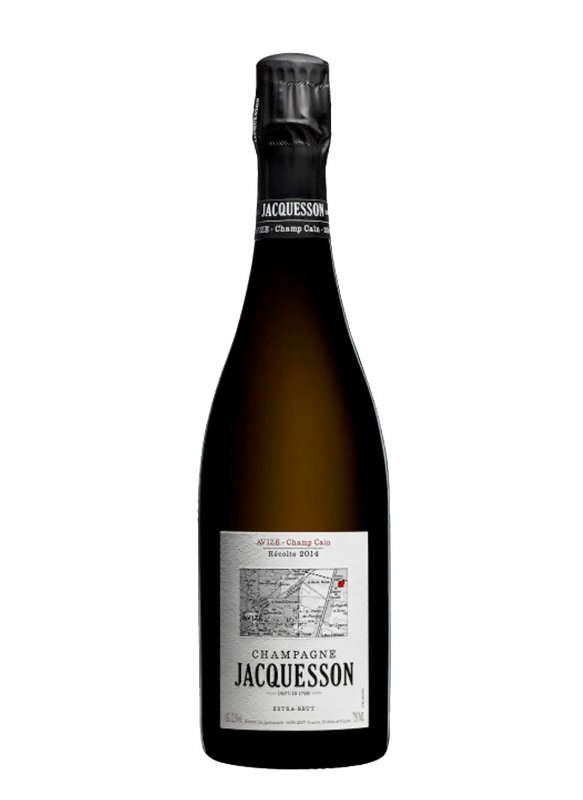
Description & Production
Jacquesson’s2014 Avize Champ Caïn is a single-vineyard champagne from the Côte des Blancs. It features notes of fresh citrus, sweet almond, and a subtle hint of honey. On the palate, the texture is silky and taut, with a chalky, lingering finish. Crafted by Jean-Hervé and Laurent Chiquet, this exclusive cuvée is part of the House’s Lieux-dits collection.
The Terroir
The Chardonnays come exclusively from the village of Avize, a Grand Cru-classified terroir in the Côte des Blancs. The Champ Caïn plot is located at the bottom of the hillside and faces due south.
Its soil consists of a layer ofsandy-loamy calcareous clay resting on gravel. The roots penetrate directly into the Campanian chalk to draw water.
The plot covers exactly 1.30 hectares and contains 12,000 vines planted in 1962. The vineyard teams use the Chablis pruning method.
The estate practices sustainable viticulture, using no synthetic herbicides. The soil is worked mechanically throughout the year.
Winemaking
This Blanc de Blancs is made exclusively from cuvée juices—the first juices to emerge from the press, which are the finest. They are then transferred to old oak casks.
Indigenous yeasts (yeasts naturally present on the grapes) initiate alcoholic fermentation. Malolactic fermentation (the conversion of sharp acidity into roundness) then occurs spontaneously in the casks. No filtration is performed prior to bottling.
Aging on racks lasts approximately 96 months. This eight-year aging period refines the texture of the effervescence and develops aromatic complexity. After riddling, the yeast sediment is removed without adding any dosage—classifying this champagne as “Dosage Zéro.”
Only 8,308 bottles and 304 magnums of the 2014 Avize Champ Caïn cuvée were produced by the House of Jacquesson.
The 2014 Vintage
In Champagne, 2014 began with a wet summer, offset by a warm September and dry winds that dried out the grapes before harvest.
The harvest from this plot took place on September 22, 2014. Manual sorting removed the few damaged berries. The average potential alcohol content reached 10.5%.
The total acidity of the must was 8.2 g/L, an ideal foundation for expressing Avize’s characteristic minerality. The 96 months on lees subsequently developed autolytic notes (aromas of toast and fine yeast resulting from prolonged contact with the lees).
Tasting Notes
Appearance
The color is a pale gold with silvery highlights. A fine stream of bubbles dances in the glass, evidence of the slow secondary fermentation under cork.
Nose
The initial nose reveals aromas of fresh citrus. As it opens up, notes of sweet almond emerge, followed by a hint of honey.
Palate
The attack on the palate is marked by a silky texture. The mid-palate reveals a briny tension characteristic of the Avize terroir. The long finish carries a subtly chalky character.

Pairing Suggestions

- Aged oysters
- Comté cheese gougères
- Scallop carpaccio

- Roasted Line-Caught Sea Bass
- Truffle risotto
- Bresse poultry

- Aged Chaource
- Aged Parmesan
- Yuzu Lemon Tart
Tips
How should I store this champagne?
Plus de Bulles ships this bottle (75 cl) in reinforced shipping boxes specially designed for transporting champagne. Upon receipt, we recommend storing the bottle horizontally, away from light. Ideally in a cellar, but in any case in a cool, not-too-dry place with a relatively stable temperature.
Aging Potential
Jacquesson’s 2014 Avize Champ Caïn will continue to evolve over the years. This cuvée has an aging potential of approximately twenty years.
- Through 2028: The profile will remain centered on lemon zest, lively fruit, and salty minerality.
- From 2029 onward: the wine will develop rich notes of dried apricot and candied fruit.
- Around 2034: The cuvée will reveal spicy hints of beeswax and toasted dried fruit.
Serving Suggestions
Serve this wine in a suitable tulip-shaped glass. The ideal tasting temperature is around twelve degrees. Allowing the wine to breathe for fifteen minutes will soften its structure on the palate.
Fun fact about this cuvée
Chardonnays from Avize are sometimes included in the blends of the House’s numbered cuvées. For example, they contribute the chalky brightness to the non-vintage Jacquesson cuvée.
Also worth discovering: the patina of time on the 743 DT cuvée.
