


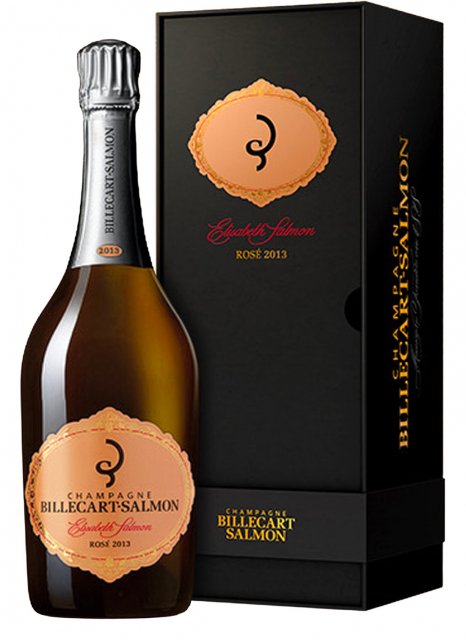


The 2013 Elisabeth Salmon cuvée from Champagne Billecart-Salmon is the height of refinement, a vibrant tribute to the co-founder of the House. Presented in its luxurious box, this exceptional rosé embodies the quintessence of the family's two centuries of expertise in fine sparkling wines. Shaped by the fresh classicism of the 2013 vintage and extended aging, it reveals a rare aromatic depth, blending the sensuality of red fruits with the nobility of spices. It is a champagne for haute cuisine, with a velvety texture, intended for lovers of racy and luminous wines.
The production of Elisabeth Salmon 2013 Billecart-Salmon champagne
The blend of this 2013 vintage is based on a subtle balance between the two king grape varieties of Champagne. Pinot Noir (53%), from the terroirs of the Montagne de Reims and the Grande Vallée de la Marne, provides structure and body. Chardonnay (47%), exclusively from the Grands Crus of the Côte des Blancs, gives the whole a crystalline elegance and mineral tension. The unique signature of this rosé comes from the incorporation of less than 10% Pinot Noir vinified as red wine. These grapes, selected from old vines in the south-facing terroir of Mareuil-sur-Aÿ, undergo a cold maceration specific to the House to extract a pure and delicate fruitiness without aggressive tannins.
The Terroir
The grapes selected for this prestigious cuvée come from the region's finest Grands Crus and Premiers Crus. For Chardonnay, the chalk soils of Oger, Cramant, and Le Mesnil-sur-Oger offer a sharp minerality and saline finesse. The Pinot Noir grapes, rooted in Mareuil-sur-Aÿ, Aÿ, and Bouzy, benefit from deeper soils and optimal sun exposure, ensuring full phenolic ripeness even in late years such as 2013. This mosaic of elite terroirs forms the foundation of the wine's aromatic complexity.
Vinification
Billecart-Salmon applies a winemaking method that combines tradition and technical precision. A small portion of the wines (5%) is vinified in oak barrels, providing micro-oxygenation that softens the texture and adds complexity to the bouquet without imparting woody aromas to the wine. Maturation on lees in the cellar is exceptionally long, lasting 115 months (nearly 10 years), allowing the wine to develop tertiary aromas and a creamy texture. The dosage is Extra-Brut, reduced to 4.4 g/l, to allow the purity of the fruit and the tension of the vintage to express themselves without artifice.
The 2013 vintage
The year 2013 in Champagne marked a return to long and late growing cycles, typical of the northern continental climate. After a cold winter and a cool spring that delayed flowering, the summer was sunny and dry, with beneficial periods of thunderstorms. The harvest, carried out in October in cool autumn weather, yielded grapes in perfect condition, with beautiful natural acidity. This vintage offers wines of great freshness, finely crafted and structured, made for aging, contrasting with the sunny vintages of previous years.
Tasting notes
Color
The color is sparkling and bright, with a salmon hue and soft coppery highlights. The effervescence is graceful, forming a persistent cordon that illuminates the glass.
Nose
The nose offers a sensual and refreshing expression. It opens with aromas of red berries (blueberry, cherry pit) enhanced by floral notes of peony and violet. Aeration reveals a marine and spicy complexity, evoking sea spray and old roses.
Palate
On the palate, the attack is caressing, combining measured power with great tactile delicacy. The delicious flavors of cherry clafoutis, Canada apple, and blood orange jelly unfold harmoniously. The long, chalky finish is marked by a hint of Corsican clementine zest.

Serving suggestions

- Royal langoustines
- Bluefin tuna tartare
- Breton blue lobster

- Bresse poultry
- Braised sweetbreads
- Roast pigeon

- Raspberry tart
- Strawberry soup
- Fruit Pavlova
Storage and serving tips
How should this champagne be stored?
This fine wine is delivered in a protective box, which should be kept to limit exposure to light. Store the bottle lying down in a cool (10-12°C), humid cellar free from vibrations. Stable storage conditions are essential to accompany the slow evolution of this exceptional vintage.
Aging potential
Thanks to the structuring acidity of the 2013 vintage and its long aging on lees, Elisabeth Salmon 2013 has remarkable aging potential. Already sublime today, it will continue to improve and gain tertiary complexity over the next 10 years and beyond. From 2030 onwards, it will develop more spicy and roasted notes, offering a new dimension to the tasting experience.
Serving suggestions
Serve this champagne at a temperature between 22 and 54°F. A temperature that is too low would mask the wine's aromatic richness and silky texture. The use of large white wine glasses is recommended to allow the complex bouquet to fully develop and to appreciate the wine's mineral dimension.

Opinion of thewine guides